Saturday, July 24, 2010

Leadership Education for Adult Professionals


LEAP (Leadership Education for Adult Professionals) is another name for IWU's College of Adult and Professional Studies (CAPS), which was founded in 1985 to meet the needs of adult students through learning opportunities that apply to the constantly changing workplace. LEAP/CAPS now has more than 23,000 graduates and a current enrollment of more than 9,000 full-time students. Graduates of Indiana Wesleyan University's adult program are representative of learning partnerships with more than 500 employers, churches, school districts, corporations, health-care agencies and organizations.

MISSION
Indiana Wesleyan University is a Christ-centered academic community committed to changing the world by developing students in character, scholarship and leadership.

VALUES
The primary value for Indiana Wesleyan University is Christ likeness. The challenge to follow Christ compels us to pursue a personal and professional lifestyle of: Commitment; Leadership; Service; Stewardship; Innovation; Diversity.

CHARGE
Indiana Wesleyan University will prepare each student to become a world changer. We will accomplish this by drawing students into an integrated experience of intellectual challenge, spiritual growth, and leadership development. Thus we will: call students to Christian character; expect academic excellence; equip them for success in their vocation; mentor them for leadership; and prepare them for service.

I do understand that your schedule is hectic and I greatly appreciate your consideration with inserting the attached Indiana Wesleyan University document in an upcoming church bulletin.

Blessings,

Robin Seaton

Director of Corporate Development

Indiana Wesleyan University -LEAP Program

Greenwood Education Center

1500 Windhorst Way

Greenwood, Indiana 46143

Office: (317) 713-1600

Cell: (815) 298-0823

robin.seaton@apollogrp.edu.

Sunday, July 18, 2010

Worship Wars-Part Two "Music in Worship."


Worship Wars – Part 2

Rev. Robert D. Shofner, Jr.

St. John's UCC- Boonville Indiana

We’re on the subject of Worship Wars and how music plays such an important part in our lives. It unites … and it divides. I gave an example of my first casualty in the current war, a young man and his family leaving our church after being told his rock ‘n roll style of music was not welcome in our worship.

There was a second skirmish shortly thereafter, but, surprisingly, it wasn’t in a church setting. It was in Rotary Club! The meetings always opened with a couple of songs printed in a yellowed, dog-eared song book led by the official “song leader.” Tunes like, Down by the Old Mill Stream, Sweet Adeline, She’ll Be Coming ‘Round the Mountain – you get the idea. Obviously, songs that appealed to an “older” generation of club members. Then they appointed me song leader. I printed up a new song book, and suddenly the club was singing Lucy in the Sky with Diamonds, Mellow Yellow, and “I got a pair of brand new rollers skates … she got a brand new key!” Obviously, the older members weren’t too thrilled. They replaced me as song leader after only a few months!

Last week we talked about the revolution in music that came during Isaac Watt’s time. It took a couple of decades for his kind of music to gain acceptance in most churches. Question. If we could put ourselves in the pews way back then, how would we react to these new fangled “praise” songs? Would we have embraced Watt’s music – or rejected it? Think about that.

Not long after Isaac Watts, in the latter half of the 1700s, came the hymns of Charles Wesley, John Wesley’s brother. His hymns were not unlike those of Watts. They generally followed great theological themes. There are 16 of his songs in our hymnal, including O For a Thousand Tongues to Sing; Love Divine, All Loves Excelling, and Jesus, Lover of My Soul. He also wrote Christmas carols, including Hark, the Herald Angels Sing; and Easter music, such as Christ the Lord Is Risen Today.

Perhaps one of Wesley’s greatest hymns is number 366 in our hymnal, And Can It Be.

And can it be that I should gain

An interest in the Savior’s blood?

Died He for me, who caused His pain?

For me who Him to death pursued?

Amazing love! How can it be

That Thou, my God, shouldst die for me?

Charles continued writing: “Long my imprisoned spirit lay / Fast bound in sin and nature’s night.” And he goes on to tell his own story:

I woke – the dungeon flamed with light!

My chains fell off, my heart was free,

I rose, went forth, and followed Thee.

. . . and concluded,

No condemnation now I dread:

Jesus, and all in Him is mine!

Alive in Him, my living Head,

And clothed in righteousness divine.

Bold I approach th’eternal throne,

And claim the crown through Christ my own.

He ends each verse with the exclamation: “Amazing love! How can it be / That Thou, my God, shouldst die for me?”

These were the themes that Charles’ brother, John, was preaching in the streets of England; great themes of personal salvation to people who had never heard them in a lifetime in most churches. Seeing prisoners in chains was common in those days. People were well aware of dungeons. This poetry was real to the people of Wesley’s day.

About the same time John Newton came on the scene. He was a converted slave trader, and he gave us “Amazing grace, how sweet the sound / That saved a wretch like me.” Newton had been a wretch of a man, and he knew it. That’s why God’s grace to him was so amazing.

All these hymns express a magnificent, saving God and, at the same time, pictures of life as people experienced it then and there. Many of the melodies were borrowed “off the street” as music familiar to that generation. The tune of Amazing Grace is but one example. The original melody was either an Irish or Scottish folk tune, often played on bagpipes. If Newton had written his hymn in the late 1960’s, maybe he would have picked another tune. I remember a worship service in 1974 when the long-haired son of the preacher I worked with sat down in the sanctuary, guitar in hand, and sang Amazing Grace to the tune of The House of the Rising Sun.

There were quite a few in church that day who were not too thrilled, to say the least. I thought it was cool. Of course, if it had been me, I would have picked a more upbeat tune, like the theme from Gilligan’s Island.

Wonder how that would have gone over?

Last time I said there were four times in the American church when people went to war over music. Let’s look at the second of those.

It came about during the time of the Civil War and immediately after. It’s hard to give a specific date, but it’s about a century or so after Watts and Wesley and Newton. One year does stand out – 1859. The country went through a devastating economic downturn, a depression, actually. Countless people were roaming the streets of cities in desperate poverty. Churches began opening their doors for the poor to come in and pray. There was an enormous spiritual revival in America and England. They call that period of time the “Open Door Revival.”

With the revival came a new kind of music. This time the music, in terms of subject matter, was more testimonial, more about one’s personal experience with Christ. There was a greater emphasis upon the individual and his or her connection with God. Jesus is more of a Friend than anything else in this kind of music. If the music has any faults, it’s that it tempts us to get too “chummy” with Jesus. I’m not sure we would want to presume on Him in only that way.

Those were the days when the songs of writers like Fanny Crosby became popular. Her music reflected the individual conversion experience. This was a time when people were more conscious of making what we call a “personal decision to accept Christ.”

It is estimated that Ms. Crosby wrote eight thousand different pieces of music penned under two hundred different names! In our hymnal she is credited with only six. She was blind, and when we read the texts of her songs, it’s interesting to see how many times she referred to sightedness as her great anticipation when she got to heaven. “And I shall see Him face to face,” she wrote in one of her songs.

Perhaps her best known hymn is Blessed Assurance; and it reflects her most important theme: Jesus is mine. The emphasis is on that personal relationship: “This is my story / This is my song.” Wesley wrote about his relationship to God; Crosby wrote more about her walk with Jesus. Ira Sankey and D.L. Moody requested many songs from Crosby, using them for the enormous evangelistic campaigns they held, wanting those songs that would call people to Christ. Rescue the Perishing, which is in our former hymnal, is a good example of that.

Rescue the perishing, care for the dying,

Snatch them in pity from sin and the grave;

Weep o’er the erring one, lift up the fallen,

Tell them of Jesus the mighty to save.

Once again, the point is this. The music – both the melody and content – reflected what was going on at the time. There was a growing emphasis on calling people to a personal conversion to Jesus, and many of these songs were written in this second wave of Christian music speak right to that. Again, the words and melodies rose out of the language and tunes of popular culture.

Ira Sankey, the great evangelistic singer, was one of the very first to appreciate what music could do in a large meeting where people were being called to surrender to Christ.

He wrote: “We now faced the problem of ‘singing the gospel’ . . .” This was an interesting term – to sing songs that tell the story of salvation. Like Fanny Crosby’s Tell Me the Stories of Jesus.

Sankey’s most famous song – which Moody was always asking him to sing – was The Ninety and Nine.

Sankey had read a poem, written by a 21 year old woman, in a newspaper. He saved the words, and one night, in the middle of an evangelistic service while Moody was preaching, he pulled them from his pocket and decided to sing them when the sermon was finished. He accompanied himself on a little pump organ and made up the melody as he went along. Listen to the words:

There were ninety and nine that safely lay

In the shelter of the fold

But one was out on the hills far away,

Far from the gates of gold –

Away on the mountains wild and bare,

Away from the Shepherd’s tender care.

The song describes the Shepherd’s passionate search for the lost sheep. And then, in the last verse, the sheep was found! And Sankey sang:

But all thro’ the mountains, thunder-driven,

And up from the rocky steep,

There arose a glad cry to the gate of heaven

‘Rejoice! I have found my sheep!’

And the Angels echoed around the throne,

‘Rejoice! For the Lord brings back His own.’

This song probably attracted as many people to Jesus in those days as Moody’s preaching. It is centered on the theme of rescue … being lost and then being found. That resonated with the many people who felt themselves lost and bewildered by all the changes in the world.

But the sad thing was … there were other people, once again, who totally rejected this new music and its content. They rejected the use of a pump organ to accompany the singing of the crowd or the soloist. They derisively called the new music “human hymns.”

Sankey wrote: “The first meeting was attended by less than fifty persons, who took seats as far away from the pulpit as possible. (Sound familiar?) I sang several solos before Mr. Moody’s address, and that was my first service of song in England. It was with some difficulty that I could get the people to sing, as they had not been accustomed to the kind of songs that I was using.”

But … as the nights went on, the crowds grew. Soon they were preaching and singing to twenty thousand people. But everywhere Sankey and Moody went, some Christians gave them a terrible time about the music they chose. They were shocked that he sang solos. Sankey wrote about a meeting in Scotland:

“One another occasion . . . while I was singing a solo a woman’s shrill voice was heard in the gallery, as she made her way toward the door crying: ‘Let me oot! Let me oot! What would John Knox [the great Scots reformer] think of the likes of you?’ At the conclusion of the solo I went across the street to sing at an overflow meeting in the famous Tollbooth Church. I had just begun to sing, when the same voice was again heard, ‘Let me oot! Let me oot! What would John Knox think of the likes of you?’”

Over and over people would walk out in the midst of the music crying out what must have been something of a cliché: “You’re singing human hymns … human hymns!” But what did they want? They wanted … they argued … that the only legitimate songs worth singing were the psalms … or Isaac Watts hymns. Go figure!

So we can see that the worship wars are nothing new. And the question – not an easy one to answer at all – arises: how does each generation open the door for the next generation to sing the gospel in its own fresh way? Think of it: the music that many of us here today love – the music of Wesley, Newton, Crosby, and those that came after – was fought bitterly by many people when it was first introduced. What if those people had been successful in their opposition?

Does all the music we love have to be thrown out just because younger people may want something different? No. We’re going to end this with an example of a small movement among younger artists to bring back the old hymnody with different melodies and upbeat arrangements. This piece is O Sacred Head Now Wounded, by a group called 4Him. It’s number 284 in our hymnal, in case you want to follow the words. Notice the Beatles’ influence in their music, and the power of the song.

O Sacred Head Now Wounded – 4Him

Let us pray.

Father, thank you again for the gift of music. This time we pray that you open our hearts and minds to be, at least, a little more open to the different styles and types of music which you inspire. You are a God who loves variety. We know that just by looking of this wonderful world You have created. Grant us the grace to love variety, too. It will truly brighten our days.

And the people said, “Amen.”


Friday, July 16, 2010

Weekly & World News...


Gulf Coast Wesleyans Wait and See

Jul. 13, 2010

“Wait and see” seems to be a way of life in the Gulf Coast city of Irvington, Alabama. Roger Bowers, pastor of Irvington’s Bayou La Batre Wesleyan Church, reports that tar balls are coming ashore, but so far a massive surge of oil is not present. Attendance is down in the South Coastal District church since some of its members are working for British Petroleum, 12-hour shifts, seven days per week in the clean-up and prevention. But the pastor said that thanks to God’s supply and the faithfulness of the congregation, financial obligations are still being met.

Rev. Bowers says of the Gulf Coast residents whose lives are being affected by the spill, “We need to pray for these men and woman and their children.” He adds, “Of particular concern is prayer that “wind shears will blow” to deter storm effects common to the hurricane season.

Bayou La Batre’s Mayor Stan Wright has organized a program called “Vessels of Honor,” which utilizes shrimpers and oysterman in using their boats to watch over the oil booms and pick up blobs of oil in the shipyard near barges and oil containment devices. Another concern for the community is the use of outside boaters who are being employed in place of locals.

Pastor Roger says in spite of the threats to the Bayou La Batre Wesleyan family, they have nothing but praise to the Lord for His continuing faithfulness.

Wednesday, July 14, 2010

Go Fish!!!


By Mark Wilson -Wesleyan Life Magazine Online

The other day while casting a line, I began to think about how fishing and discovering opportunities are alike. If you want to "land" a few golden opportunities, you have to go fishing! Whether at home, work, church, or civic organization, you can catch a few golden opportunities if you apply certain laws of fishing.

1. Go where they are.
Nobody has ever caught a fish in the bathtub or the backyard wading pool, and you won't catch opportunities by waiting around for them to come to you. The chances of catching a fish increase greatly when you go fishing. How much energy and time are you investing in future possibilities? How often do you look for the opportunities around you? Where do you want to go in life? Does the path you are currently following lead to that destination?

2. Keep your eyes open. Good fishermen are always watching for signs of a hungry fish. Often, a casual observer will not even notice, but an angler will see the slightest indication. When fishing for opportunities keep your eyes wide open! Some folks wouldn't recognize a good opportunity if it bit them on the toe! What opportunities are before you right now? What are you going to do about them?

3. Think possibility! Whenever I take my kids out fishing, we expect to catch something wonderful this time. We talk about the record muskies and the beautiful walleye we're anticipating. Even if we don't land any, it's fun to dream. When fishing for opportunities, you will maintain enthusiasm as you think about what could possibly be. Are you settling for small thoughts, or are you stretching your brain with big possibilities? Are you content with catching minnows when you could be landing muskies?

4. Keep casting. If you get skunked, keep casting. Many novice fishermen decide that fishing's just not for them because they don't catch anything right away. That happens with opportunities too. You have to keep plugging away. Keep looking for new, creative ideas. Keep your mind open and sooner or later the big one will sink the bobber. Are you discouraged? Tempted to quit? Don't give up! Keep casting!

5. You can't catch all the fish. Don't mope and pout about missed opportunities. Every great fisherman has stories of the "one that got away." Missing an opportunity should simply be motivation for catching the next one. Are you spending too much time bemoaning the opportunity that passed you by? Bait your hook, and go fishing again!

6. Use the right bait. Different kinds of opportunities require different approaches. What kind of opportunity are you trying to land? Are you going about it the best way possible? If you are not landing the right kind of opportunities perhaps you are going about it in the wrong way. Think again! Evaluate!

7. Take someone with you. Fishing with friends is a lot more fun than fishing alone. As you go after new opportunities, be sure you take others with you on the journey.

8. Timing is everything. The fish bite better at certain times than others and the same thing applies with potential opportunities. What are the natural "windows of opportunity" in your situation? How are you making the most of them?

9. Celebrate! Celebrate! Catching a wonderful fish is cause for great celebration and landing a great opportunity is too. Take a moment to rejoice and then toss out the line again!

Saturday, July 10, 2010

Upcoming Chandler Holiness Campmeeting


Please be in prayer for upcoming Chandler Interdenominational Holiness Camp. Rev Russel Coffee will be the Evangelist and the Mike Bell Family will lead singing and provide special music. Camp will be help August 1-8, 2010 Prayer Night Sunday at 6:00PM Missionary Night Monday at 7:00PM Rev. Russel Coffee Tuesday thru Sunday Evening 7:00PM nightly 6:00PM Sunday If the weather is unbearable at meeting time we will move to adjacent air-conditioned Chandler Church of the Nazarene.

Your pictures and fotos in a slideshow on MySpace, eBay, Facebook or your website!view all pictures of this slideshow
  • Rev. Dennis King/ President
  • Rev. Keith Kiper /1st Vice-president
  • Rev. Robert Buchanan/ 2nd Vice-president
  • Jeani Lutz /Secretary
  • Jacquita Daugherty /Treasurer

  • Rev. Allen Adams
  • Rev. Ed Ames
  • Rev. Kenton Daugherty
  • Susan Ice
  • Bill Johnson
  • Jeff Knirs
  • Caleb Konopka
  • Keith Lochmueller
  • Wanda McGuinn

Tuesday, July 6, 2010

"Legislating" Morality...is it Biblical?

Genesis—The Source of Traffic Laws?

www.answersingenesis.org

It is impossible to pass a law Traffic Signalthat is free from moral implications. The real question is not whether man can legislate morality, but which system of morality will be legislated. All laws are either explicitly moral or procedures that uphold a moral concept. Even laws requiring traffic lights impose “morality.” The purpose of traffic lights is to stop people from having accidents, thus protecting property and preserving life.

Even simple laws, like traffic lights, presuppose that (a) order is good and chaos bad, (b) property rights should be honored, and (c) life should be preserved. Each of these principles is rooted in the Genesis account of origins: (a) God the Creator, who declared His work “very good” (Genesis 1:31), is not the author of confusion (1 Corinthians 14:33); (b) He commanded man to bring order to creation by taking dominion over the earth, thus laying the foundation for property rights (Genesis 1:28); and (c) He established the sanctity of life as the first principle of lawful government (Genesis 9:5–6). These are the unspoken moral assumptions behind a traffic light.

Sunday, July 4, 2010

America's Christian Foundation

First Prayer in Congress

The United States of America definitely has Christian foundations. George Washington, father of our country said, the federal government can never be in danger of degenerating into a monarchy, an oligarchy, an aristocracy or any other despotic or oppressive form so long as there shall remain any virtue in the body of the people. And so we see clearly, that our founding fathers came here to the United States of America, and they had a deep appreciation, indeed an abiding knowledge, that their freedom came from God Almighty. And as John Adams said, our Constitution is made for a moral and religious people.

God is the one who gives liberty to us. God is the one who grants freedom to nations. Whenever we understand that, and we pass that knowledge on to another generation, then they tend to hold on to that liberty and that freedom, and they don’t give it up. But the converse is also true, whenever a nation or a people fail to acknowledge and give proper recognition of where our freedoms and liberty come from then they fail to pass that on to another generation. It is only a matter of time before that generation will slip down into oppression and bondage. They will lose their freedoms.To read more and watch a video click here: Christian Nation

Happy Independence Day!


The black-robed regiment of the Revolutionary Period were men of God who spoke out concerning the issues of the day. The name was given to a name of pastors, especially in colonial America that were very instrumental in America winning their independence. The reason why they were called Black-Robed regiment is because every Sunday they would mount their pulpits wearing their long black clerical robes, that’s how preachers would preach in that day. They would get in their pulpits wearing these long black robes, and they would preach the Word of God without fear or favor. These men of God would get in their pulpits and they would basically tell people what or who they should and should not vote for, because they understood that in order to have a great government, then you must have great citizens. The way that you have great citizens is by having great people that are rooted in the foundation of the Word of God. Week after week after week, they expounded upon the principles of the proper role of government, the proper role of individuals, all underneath the kingship of the Lord Jesus Christ. To learn more and see a video click here: Black Robed Regiment

We had a "visitor" from the Black Robed Regiment in our service today. To see more pictures, click here: Independence Day Prayer Breakfast

Monday, June 28, 2010

How Christianity Shaped the West


by Rev. Robert D. Shofner, Jr.

St. John's UCC Boonville, Indiana

In the past few years there have been a slew of new books which make a direct attack on Western Christianity. Richard Dawkins’ The God Delusion and Samuel Harris’ The End of Faith along with others such as Christopher Hitchen’s God Is Not Great, make the case that our western society would be a lot better off if we just got rid of all vestiges of Christianity. They contend that we live in a secular, post-modern era that has no room nor patience for the patriarchal, nationalistic and oppressive religion of our fathers. Dinesh D’Souza, author and political thinker, states that unfortunately, what these ill—informed atheists fail to realize is, that religion, Christianity, is responsible for the principles and institutions that even atheists cherish; chief among them, equality and the liberty to proclaim that God is dead. His argument continues thusly.

Thomas Jefferson famously proclaimed in the Declaration of Indepe

ndence that “all men are created equal.” He wrote that this truth was clearly “self-evident.” However, he didn’t mean that it is immediately evident.

There is something absurd about the claim of human equality, when all around us we see evidence of inequality. People are unequal in height, weight, strength, stamina, intelligence, perseverance, truthfulness, and in about every other quality. But this kind of equality is not what Jefferson was talking about. He was asserting that human beings are moral equals, each of whom possesses certain equal rights. No matter how they differ in other respects, each person’s life has a moral worth no greater and no less than that of any other. To this way of thinking, the rights of a Philadelphia street sweeper are the same as Jefferson himself.

Where did this radical idea come from? Christianity. Many would say that it came from the example of the democracies of Greece and Rome . The founding fathers would say otherwise. One contributor to the Federalist Papers wrote: “Had every Athenian citizen been a Socrates, every Athenian assembly would still have been a mob.” Obviously, they were no

t enamored with that kind of direct democracy susceptible to the passions of the mob and supported by large-scale slavery, nor with the morality that was the norm in those ancient days.

In ancient Greece and Rome , individual human life had no value in and of itself. Abortion was rampant. The Spartans left weak children to die of exposure. Fathers who wanted sons would, without conscience, drown their newborn daughters. Human beings were routinely bludgeoned to death or mauled by wild animals for entertainment purposes. Roman Christians were dipped in tar, hung on posts, and set on fire to provide background lighting for Nero’s garden parties. Many of the classical thinkers saw nothing wrong with these practices. It would take Christianity to foster moral outrage at the mistreatment of innocent human life.

Likewise, women had a very low status in ancient Greece and Rome , as they do today in many cultures, notably in the Muslim world. Such views are common in patriarchal cultures. Arguably, they were prevalent in the Jewish society in which Jesus lived. But Jesus broke the traditional taboos of his time when he scandalously included women of low social status to travel with him and be part of his circle of friends.

Christian views of marriage and divorce served to so elevate the status of women that they flocked to the fledgling Church, so much so that Romans scorned Christianity as a “religion for women.”

Then there is slavery, a favorite topic for the new atheist writers. Samuel Harris writes in Letter to a Christian Nation, “Consult the Bible and you will discover that the creator of the universe clearly expects us to keep slaves.” We want to remember that slavery pre-dated Christianity by centuries. It was widely practiced in the ancient world, from China and India to Greece and Rome . Most cultures regarded it as an indispensable institution. Sociologist Orlando Patterson noted that for centuries, slavery needed no defenders because it had no critics.

Christianity, from its very beginning, discouraged the enslavement of fellow Christians. After all, how can a slave also be a brother in Christ? Christians began to regard slavery as indefensible. As a result, slavery withered throughout medieval Christianity and was replaced by serfdom. While slaves were “human tools,” serfs had rights of marriage, contract, and property ownership that were legally enforceable. In the course of time, serfdom collapsed under the weight of the argument for human dignity.

Christianity played a vital role in the development of that new concept of freedom through its doctrine that all human beings are moral agents, created in God’s image, with the ability to be the architects of their own lives. The Enlightenment philosophers and politicos continued to contribute to this understanding of human freedom, drawing their ideas from the teachings of the Church.

Politically active Christians remained at the forefront of the modern anti-slavery movement. In England , William Wilberforce spent years of his life pushing for abolition, which finally came about in 1833. In what would become the United States , Quakers led the way, soon joined by others, notably the Congregationalists, in applying politically the Biblical notion that human beings are equal in the sight of God. Understanding equality in this way, these Christians promoted the view that no man has the right to rule another man without his consent. This idea, contained in the Declaration of Independence and set as law in the Constitution, is the moral root of both abolitionism and of democracy.

What many atheists fail to realize, or refuse to acknowledge, is that some of the greatest events in American history were preceded by massive Christian revivals. The First Great Awakening swept the country in the mid-eighteenth century and helped lay the moral foundation for the American Revolution. When Jefferson proclaimed that human equality is a gift from God, he was explicitly saying that we are endowed by our Creator with inalienable rights. There is no other possible source for them. Jefferson later wrote that he was not expressing new ideas or principles when he wrote the Declaration, but was rather giving voice to something that had become settled in the American mind.

John Adams wrote: “What do we mean by the American Revolution? The war? That was no part of the Revolution; it was only an effect and consequence of it. The Revolution was in the minds of the people … a change in their religious sentiments.” Those religious sentiments were forged in the fiery sermons of the First Great Awakening.

The Second Great Awakening, which began in the early nineteenth century, left in its wake the temperance movement, the movement for women’s suffrage, and most importantly the abolitionist movement. It was the religious fervor of men like Charles Finney, the Presbyterian lawyer who became president of Oberlin College , that animated the abolitionist cause and contributed so much to the chain of events that brought about America ’s “new birth of freedom.”

Fast forwarding to the twentieth century, the Reverend Martin Luther King’s “I Have a Dream” speech referred to a promissory note and demanded it be cashed. He said: “. . . we have come to our nation's capital to cash a check.

When the architects of our republic wrote the magnificent words of the Constitution and the Declaration of Independence, they were signing a promissory note to which every American was to fall heir. This note was a promise that all men, yes, black men as well as white men, would be guaranteed the unalienable rights of life, liberty, and the pursuit of happiness.”

Remarkably, King was resting his case on a proclamation issued 200 years earlier by a Southern slave owner. Yet in doing so, he was appealing to a principle that he and Jefferson shared. Both men, the twentieth century pastor and the eighteenth century planter, reflected the influence of Christianity on American politics; a politic that promotes and preserves freedom.

And what is freedom?

To the ancient Greeks, freedom was the right to active involvement in the political life of the city. There was certainly no freedom of thought or religion of the kind we hold dear.

The modern idea of freedom, by contrast, is rooted in a respect for the individual. It means the right to worship in any way we chose or are so moved, be that Christian, Muslin, Hindu, Buddhist, even this New Age nonsense promoted by Oprah Winfry! It means the right to buy and sell property, the right to travel where we want, the right to own our own personal space, and the right to live our own life. It even means the right to run for President! In return, we are responsible only to respect the rights of others.

This is the freedom we say we are willing to fight for. But are we really?

One of Western civilization’s greatest atheists was a German philosopher by the name of Friedrich Nietzsche. He issued a warning to us. He said the ideas that define Western civilization are based on Christianity. Because some of these ideas seem to have taken on a life of their own, we might have the illusion that we can abandon Christianity while retaining these ideas. This illusion, Nietzsche warns, is just that. Remove Christianity and the ideas fall too.

Consider the example of Europe , where secularization has been occurring for well over a century. For a while it seemed that secularization would have no effect on European morality or religious and social institutions. Yet there is increasing evidence today of the decline of the nuclear family. Overall birthrates have plummeted, while rates of divorce and out-of-wedlock births have skyrocketed. And in the churches, priests are offering up the Eucharist in front of altars facing empty naves.

The same sad tale in true in our own country. Divorce rates, abortion, out-of-wedlock births, drug addiction – all have increased dramatically. Church attendance has dropped significantly; less than 20% of the overall population regularly attends worship, down from over 60% in the 1950’s. (And you thought it was all the preacher’s fault!)

Nietzsche also warned that, with the decline of Christianity, new and opposing ideas would arise. Consider the states, and sadly, the national churches, such as our own United Church of Christ, which demand radical redefinition of the family, the revival of eugenic theories, and even arguments for infanticide.

What does this have to do with us on this day?

The eradication of orthodox Christianity – and of organized religion in general – would also mean the gradual extinction of the principles of human dignity. Consider human equality. Why do we hold it dear? Because of the Christian idea of equality in God’s eyes. The attempt to ground respect for equality on purely secular grounds is folly. There is no basis on which to do so, other than it seems the “right thing to do.” It only seems the “right thing to do” because it is based on God’s Word and the ideals of the Christian faith. Take that away, and it is sheer stupidity to believe it could survive without the continuing aid of religious belief.

If we cherish what is distinctive about Western civilization, then – whatever our religious conviction – we should respect rather than denigrate its Christian roots.

How? By supporting our local church. By teaching our children the values of the Christian faith. By respecting the faith of others in this nation. By staying vigilant and speaking up when politicians, and even church leaders, suggest that we abandoned the heritage of our faith in this so-called post-modern age. By always remembering that God blesses this nation not because of our strength, but because of our faith.

Let’s pray.

Heavenly Father, Your Word has given us a goodly heritage, a heritage that ultimately overcomes the barriers that sinful human nature builds between peoples and nations and creeds. Let us always remember that it is from You that we gain our worth; that it is in the light of Your Word that we recognize all people are created in Your image, and are therefore equal in Your sight. For You loved this world so much that You sent Your only Son to us, not that we should be condemned, but that we, and all peoples, might be saved through Him.

And the people said, “Amen.”

Thursday, June 17, 2010

Bits and Bytes with the Bagleys

GP_Logo_RGB_Sm.jpg
Malaza2_358x141
~ Bits & Bytes for Bagley Backers - June/July 2010 ~
Swaziland Glimpses

Our recent trip to southern Africa finished up with a whirlwind visit to Swaziland where we started our missionary career 28 years ago. We were thrilled with a number of positive signs of growth and development in the church there.

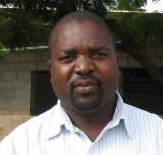
  • Pastor Walter Malaza (pictured above), a former student of ours, showed us around several "care points" he had established in rural areas. The ten "care points" serve as feeding stations for orphans, education centers for the community, and all have churches established or being planted.
care point 2
  • We saw several significant church building projects underway - all at local initiative using local resources. The white building in the foreground in the photo below is the current church building at Ntabamhloshana, which has been outgrown by the congregation necessitating the construction of the larger building at the top of the photo.

church2

  • Despite no longer being sponsored by World Hope Canada, the ministry of the Fortress and the Children's Village continues under the leadership of Mrs. Thabsile Thwala. Some of those ministries have been scaled back due to a decrease in funding, but orphans are still be cared for and counseling services are still be offered to abused women and children.

Thwala

  • Emmanuel Wesleyan Bible College is facing challenging times, having recently lost several missionary staff members, leaving Dorcas Croft as the sole missionary at the college. Enrollment is down to 12 students, and the college is facing related financial stress. However, a solid African staff is in place giving good leadership, including newly appointed Principal, Bhekisisa Maziya (below).

EWBC2 2 Maziya2 2


In This Issue

Our Event Calendar

June 13-18, 23-25 - Indianapolis, IN, Missionary Training Institute

June 20 a.m. -- Jersey Shore, PA - Lighthouse Wesleyan Church

June 20 p.m. -- Loganton, PA - Loganton Wesleyan Church

June 27 -- Bellaire, OH - United Wesleyan Church

July 2-11 -- Browns Flat, NB - Beulah Camp

July 18 -- Norton, NB - Norton Wesleyan Church

July 24-26 -- Denton, MD - Champlain District Camp

Aug. 23-Sep. 10 -- Manzini, Swaziland - Emmanuel Wesleyan Bible College (Brenda)

Aug. 26-29 -- Lusaka, Zambia - National Conference

Sept. 16-19 -- Likasi, Democratic Republic of Congo - National Conference

Oct. 17 -- Xai Xai, Mozambique - Xai Xai Bible College graduation

Oct. 30 -- Manzini, Swaziland - EWBC graduation

Nov. 21 -- Truro, NS - Central Nova Wesleyan Church

Support Team

We are grateful for all who have made a commitment to become part of our regular prayer and/or financial support team. If you haven't done so, you can join the team by clicking the link below. Thanks!

button_1

Bob and Brenda2_185x266

Forward to a Friend

You can help us by forwarding "Bits & Bytes" to friends who will be interested in the work of Global Partners in Africa. Just click on the link below.

Friends who receive the email will also be given an opportunity to sign up to receive it in the future.

Forward this message to a friend
An easy to print version of this email can be found here.

Ministry Vehicle Donated

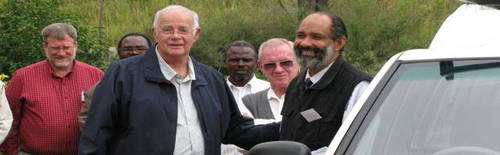
During the recent Regional Board meeting held in South Africa, Boksburg Wesleyan Church, a local South African congregation, presented a new ministry vehicle to the Southern Africa church for use in ministry in a needy District. The photo shows lay leader, Tom Eloff, making the presentation to Pastor Bill Niemack, District Superintendent of the Transkei District.


vehicle

Prayer Requests

Please help us pray for the following needs:

  • We leave August 3rd for a three-month stint in Africa. Please pray that God will help us to plan and prepare appropriately and that our ministry on the field will be productive.

  • Graduation at Pilgrim Wesleyan Bible College in Zambia is July 24th. Pray for God's blessings to be on the graduates as they make the transition to ministry positions.
  • Pray for the leadership of the Zambian church as they strategize and plan for integrating the Ugandan churches into the wider church and as they look for ways of effectively providing training for the pastors of those congregations.
  • Recent surgery on Mrs. Thabsile Thwala, Director of the Fortress and the Children's Village in Swaziland revealed much more extensive concerns than originally expected. Please continue to pray that God will grant her a full recovery.

Praise Points

  • Assistant Africa Area Director, Jerry Manwaring, reported a very encouraging visit to the new church work in Uganda where there are 60 churches/preaching points.
  • Our support level has now passed the two-thirds point. Thank God for those who have responded to the need. (Full support still needs to be raised before we will be given clearance to deploy to the field long-term.)
  • Recently Bob met with the International Partnership Team for Ghana in Brockville, ON. The team consists of several Districts and local churches, Project Reach Out, and Rev. Joe Ocran, the national superintendent of Ghana and meets to help coordinate efforts to assist in the development of the Wesleyan Standard Church of Ghana. An exciting atmosphere prevailed as the team explored ways to not only strengthen the Ghana work, but discussed the vision for Ghana becoming a launching pad for outreach in countries to the north and east.
Bob & Brenda Bagley | rbagley112@gmail.com

Tuesday, June 15, 2010

Five Central Teachings of Protestant Reformation

What does it mean to be a Protestant? These are five of the major teachings of the reformers by which they distinguished their beliefs from those of the Roman Catholic church of their day. I affirm all five of these beliefs because I think they reflect the Bible’s teaching:

1. Sola Scriptura – “The Bible alone.” Scripture alone speaks authoritatively, and it speaks to all believers, independently of church leaders and councils, human interpreters and so-called spokesmen for God.

2. Sola Gratia – “Grace alone.” It is only by the unmerited favor of God that Christ went to the cross and paid the price for man’s salvation. Man is by nature depraved—he has no virtue that commends him to God. Therefore God’s grace to him is truly undeserved and amazing, and God’s grace alone has the power to draw people to himself.

3. Sola Fide – “Faith alone.” Only total righteousness is acceptable to God, and that is found in Christ, not us. Man can only accept Christ’s work by placing his trust in him. Man is justified by faith alone in the finished work of Christ, not by any works of his own.

4. Sola Christus – “Christ alone.” Salvation is accomplished by Christjohn calvin alone, and mediated by Christ alone—not by angels, saints, relics, sacraments, priests, teachers, churches, or anyone or anything else. Christ alone was the perfect Savior, and he alone is the perfect prophet, priest and king.

5. Soli Deo Gloria – “To God alone be glory.” God should be thanked, praised and given full credit for his sovereign grace and spiritual and physical provision. Theology should be God-centered, not man-centered. God should be put in his place and humans in theirs. Our efforts should not elevate and celebrate men but God. We should bring him glory in our work, in our homes and at play. He, not we, should be the center of all things.

For more resources, see http://www.monergism.com/directory/link_category/Five-Solas/

www.facebook.com/randyalcorn
www.twitter.com/randyalcorn
www.epm.org/blog
www.epm.org/