Showing posts with label Christian Heritage. Show all posts

Thursday, April 5, 2012

"Easter or Resurrection Sunday?"


Guest Blog by Rev'd Dr. Todd Stepp


Facebook is an interesting phenomenon. A number of you know well about the pros and cons of it. On the one hand, people can let it become a royal waste of time. They can be consumed by a “virtual world” and sink further and further away from the real world. On the other hand, it can be a great place to keep up with friends from high school, college, church and work. It can be a way to keep in touch with people from around the country and even the world. Facebook can be a great place to encourage people in their faith and find encouragement in your own faith. - And, apparently, Facebook can be credited (or blamed) for resulting in this article!


You see, this article is my response to two different posts from my Facebook “friends.” The first post was one of those “copy this and post it to your status” type of posts. - By and large, I don’t really like those. Much of the time they imply or out and out declare that if you don’t copy and paste it, somehow you aren’t really a Christian, or you’re ashamed of Jesus. - By God’s grace, I am a Christian, and I am not ashamed of Jesus . . . but I don’t like those types of posts, and I don’t copy, re-post, or forward them. - Having said that, I’m about to re-post it here(!):


Facebook challenge. . .During this couple of weeks before Easter, I am out to prove that my friends will repost, I hope I am right!!! Easter is not about bunnies and chocolate eggs. Let’s lift up God’s name and make a statement!! When Jesus died on the cross he was thinking of You and Me. If you are not ashamed to call Jesus Christ your savior, copy and repost. I’m not ashamed.

The second Facebook post comes from a friend from high school. In this post, she is responding to everyone who has been copying and re-posting the post, above. And, oh yeah, I should mention, on her Facebook profile, under “Religious Views,” she self-identifies as “Wiccan/Pagan.” And, unlike some, it seems that she has read a bit on the subject, and she is, therefore, often able to offer some informed critiques (sometimes stinging critiques!) of some who claim to be Christians. - Here is her response to the post, above:

For those posting the thing about Easter not being about bunnies and chocolate, you’re half way right. It’s not about the chocolate, even though the ancient Azte[c] people thought of chocolate as an [aphrodisiac]. Easter is a Pagan fertility holiday meant to celebrate the return of life to the earth during Spring. Rabbits, bunnies if you like, are extremely fertile, and eggs are also symbols of fertility.

She goes on to comment: “In particular, it is a Celtic Pagan holiday, though other ancient civilizations around th[e] world have had their own version of it.”

So who’s right? What are we to make of this? Is Easter really a Pagan holiday, or a Christian Holy Day? What about all of those bunnies and Easter eggs? Are they Pagan or Christian or secular?

When we take a good, hard, honest look at it, I would suggest that both, those who have made the first post, and my friend from high school, are correct. - “But how can they both be correct?” you may ask. And am I, a minister of the Gospel of Jesus Christ, saying that Easter is a Pagan day? - Well, let’s take a look.

“Ben” Obi Wan Kenobi once told Luke Skywalker (in Star Wars: Return of the Jedi) that, “. . . many of the truths we cling to depend greatly on our own point of view.” - It really sounds a lot like a post-modern denial of any absolute truth. Nevertheless, our position (our point of view) and the position (or point of view) of the person we are addressing does make a difference.

It is clear that the original Facebook post was intended to address the issues of the secularization and the commercialization of a Christian Holy Day, viz., Easter.

Most of us like candy, I think. It may not be good for you, but, often times it sure tastes good! However, for a number of people, especially children, Easter is looked at solely as a time when they get Easter Baskets filled with candy. It is a time for hunting eggs filled with . . . candy, and, also, the possibility of winning prizes. Then, of course, for those who do attend worship on Easter Sunday, there is the “need” to purchase new, Easter clothes. - Easter has become a huge money making event. It has become commercialized.

Likewise, it is a fact that many families, inside and outside of the Church, celebrate Easter. This is the case, very much like it is the case for Christmas. You see, just as one can celebrate Christmas with trees, decorations, reindeer, Santa Clause and presents, one can celebrate Easter with bunnies, Easter baskets, and eggs; all without the mention of Jesus (save in the name “Christ-mas”). Easter, like Christmas, has not only become commercialized, it has also become secularized.

To this reality, a number of people on Facebook have declared, “Easter is not about chocolate and bunnies, it is about the resurrection of our Lord and Savior Jesus Christ!”

But then, in walks my friend and a growing number of people just like her. She is not the secularist, or the one promoting commercialization. She hears the protests of my other Facebook “friends,” but she hears it from the “point of view” of a Wiccan/Pagan. And, in doing so, she brings to light certain aspects of the Easter celebration about which many Christians may not even be aware. Why is there such a thing as an Easter Bunny? Why Easter eggs, and why do we even call it Easter? She wants us to know the answer to these questions. In fact, reading between the lines, it maybe that she (or, at least a number of contemporary Pagans) is not too happy that we Christians have “stolen” this “Pagan celebration.”

Is she right in her claims? - Well, to large extent, she is! - But before you pull out those stones, let me talk a bit about it.

First, the celebration of the Resurrection of Jesus by the Church was not “stolen” from any Pagan group. Since the resurrection of Christ is central to the Christian faith, there should be no surprise that its celebration has existed from the earliest days of the Church. In fact, even in the New Testament, we see evidence of the celebration of the Resurrection of Christ in Paul’s First letter to the Corinthians (5:7-8). In this passage Paul makes the connection between Christ’s passion/resurrection and the Jewish Passover, or Feast of Unleavened Bread. There, Paul says, “. . . For our paschal lamb, Christ, has been sacrificed. Therefore, let us celebrate the festival” (NRSV)1.

In fact, it should be noted that, outside of the English speaking world, the celebration is still called by the ancient name which Christians used for centuries. It is still referred to as the Pascha. Pascha is the Hebrew word for Passover. The Greek and Latin languages continued with that same word. Other European languages have used titles derived from it, as well (e.g., French: paques; Spanish: pascua; Dutch: pasen; and Scottish: pask). They can all still proclaim, with Paul, in the midst of the Eucharistic Sacrament, “Christ our Pascha (Passover) is sacrificed for us.” It makes no sense to declare, “Christ our Easter is sacrificed for us.”2

As you might be able to tell, I would highly agree with those who would argue that Christians ought to reclaim the ancient terminology over against the English term, Easter. - So, where did this term, Easter, come from, and why does the English speaking world use it in reference to the celebration of Christ’s victory of sin, death, hell and the grave?

Well, back to my friend’s post. She is, indeed, correct that the term, Easter, originates from within the Pagan world. It comes as an Old English adaptation of Eastre, which, according to George Gibson, is the name of the Teutonic goddess of spring and dawn.3 In other words, it was connected to a Pagan Spring festival that did focus on the return of life to the Earth. So, what about some of the symbols of Easter?

We know that eggs were used in rituals and ceremonies. They were sometimes hung in pagan temples and used for mystical purposes. However, when Christians adopted them as a symbol for the Paschal (Easter!) celebration, they took on new meanings. For some they symbolized eternal life, because they hold the hope of things to come. For others, they symbolized the tomb, which was emptied when Jesus was resurrected. In fact, it is said that early Christians made it a rule that eggs could not be eaten during the 40 days of Lent. It also became customary to decorate the eggs and prepare them as gifts to be given on Easter Sunday. When an egg was exchanged, the giver would say, “Christ is risen,” and the receiver would respond, “Christ is risen indeed!”4

My guess is (without doing all of the research) my friend is probably essentially correct about the use of “bunnies,” etc. Certainly, she is correct that ancient civilizations from around the world have celebrated, not only the spring, but also the times of harvest. Perhaps some of those celebrations could be rightly considered Pagan, but some were simply seasonal/cultural celebrations. Even Jewish religious celebrations included seasonal celebrations, as well.

But why would Christians take on Pagan practices?

To begin, let’s recognize that Easter is not the only example of this practice. A good example (and explanation) is found in the practice of St. Patrick. Patrick was taken as a slave to Ireland. After his escape, he entered holy orders and returned to Ireland as a bishop and a missionary. As the Pagans of Ireland converted to Christ and the Christian faith, Patrick did some very interesting things. He “Christianized” or “sanctified” a number of the things that had previously been associated with their Pagan culture. For example, Patrick built Christian churches for those converts on sites that they had viewed as sacred prior to their conversion. He placed Pagan, “holy” wells under the protection of Christian saints. And he carved crosses on what the former Pagans previously considered to be sacred symbols. - As I said, he “Christianized” or “sanctified” certain aspects of the old, Pagan life of these newly converted Christians.

One can look at this practice, to use Obi Wan Kenobi’s words, from more than one “point of view.” From a Pagan point of view, what Patrick did (and what the Church has done) may be viewed as “stealing” their sacred objects, symbols and celebrations (though I would suggest that, in Patrick’s case, the missionary efforts of one former slave resulting in the transformation of a nation could not be construed as “stealing,” but as an example of the grace of God). On the other hand, from the Christus Victor point of view, Patrick’s practice (and that of the Church throughout history) was a demonstration of Christ’s victory over the various gods, which are really no gods at all. And from a pastoral point of view, Patrick (and the Church) assisted the new converts in their new found faith by affirming that God had been at work even in the midst of their previously Pagan (mis)understandings.

I would suggest that these types of approaches to various faiths can be seen, even in the pages of the New Testament. St. Paul’s approach to the people of Athens, as recorded in Acts 17:16-34, is a great example. While in Athens, Paul discovered, among the various idols, temples and altars, an altar with the inscription, “To an unknown god.” Paul responded by declaring to the people, “What therefore you worship as unknown, this I proclaim to you,” and he went on to proclaim to them the Gospel of Jesus Christ. He even quoted of their own poets in an affirming manner, pointing them ahead to God in Christ Jesus. In fact, the New Testament, itself, demonstrates that Jesus not only fulfilled Old Testament prophecies, but “filled them full” of new and added meaning.

What Paul did, and what the Church has done, fits nicely with what we Wesleyans refer to as Prevenient Grace (the grace that goes before). We believe, as one of my seminary professors used to say, that “God is at all times, in all places, calling all people to be reconciled to God.” Paul recognized, not only in the Athenians desire to look beyond themselves and to worship, but especially in this altar to an unknown god, the Prevenient Grace of God reaching out and drawing them to God’s self.

We Christians, especially we Wesleyan types, would do well to look and try to discern where God is at work drawing people by grace. What can we affirm? What is there in other faiths, sincerely held, that we see pointing ahead to Jesus?

It seems obvious that Christians encountering certain Pagan objects and practices would see in them the voice of God pointing ahead to Christ, and that many of these various things that were formerly a part of the new Christian convert’s “old life” would be adapted with new, added meaning and significance in Christ. Of course, Christians would see anything that pointed to new, or renewed life, as being symbols of the One who is the Author of Life; the One who promises to us a new life; life abundant and life eternal!

Unfortunately, much of the Church (at least, here in the U.S.) has lost this perspective of Prevenient Grace. The first of the Facebook posts, above, demonstrates that our mindset has been to defend and argue against the encroaching secularism and consumerism of our age. I think that there is validity in this. However, I think that the Church can do other things to “keep Christ in Christmas” and Easter. For example, I suggested, last winter, that one way to keep Christ in Christmas is to observe Advent as a season of preparation (rather than being sucked into the secular celebration of Christmas beginning even before Thanksgiving), and then celebrate the Twelve Days of Christmas leading to Epiphany. Another suggestion was to “keep the Mas(s) in Christmas,” a well. That is, gather with the Church to worship on Christmas (Eve and/or Day), rather than treat it as just a “family holiday.”

For Easter, I would suggest the same kinds of things. Observe the season of Lent. Participate in the Holy Week services of Passion/Palm Sunday, Maundy (Holy) Thursday, Good Friday, and the Easter Vigil/Sunrise service. In the ancient Church’s great paschal celebration, they viewed the services of Thursday through Easter morning, as one celebration. And then, since Easter is not just one day, celebrate the Great Fifty Days from Easter morning until Pentecost Sunday. - And, of course, reclaim the Paschal terminology. (A bit of a pet peeve of mine is that the Christian radio stations do not seem to help, but rather hinder us in this effort!)

Beyond “keeping Christ in” the various Christian holy days, we Christians are going to have to realize that the post-modern, twenty-first century in which we now live is becoming more like the days of the ancient Church than the days of the modern Church. We will encounter, more and more, those around us of various faiths; some are those that we are somewhat familiar with (e.g., Judaism, Islam, Buddhism, Hinduism, etc.), but others are newer to us, though with their own ancient origins (e.g., Wicca and the various forms of Paganism).

As we encounter these friends, neighbors and even family members, we are going to have to learn to prayerfully discern where God is already at work drawing them. What can we affirm? At what points can aspects of their faith be seen to point ahead to Christ who is the fullness of God? That is to say, where/what is their “altar to an unknown god,” and where is God’s Prevenient Grace already at work? By prayerfully discerning where God is already at work, we will be in a better position to be able to share with them our faith in Jesus Christ. (And, it should be noted, “sharing” one’s faith with friends, neighbors, family, etc. implies a relationship of love, not an argumentative “drive-by” encounter.)

So, what do we conclude? Is Easter a Christian holy day or a Pagan holiday? It “depends greatly on our own point of view.” For my “Pagan” friend, it is, indeed a Pagan celebration. But, for those of us who have experienced new life through the grace of God, by faith, it is the glorious celebration of the resurrection of our Lord and Savior Jesus Christ! Therefore, let us be bold to proclaim: “Christ is risen! He is risen, indeed! Hallelujah!!!”

________________________________________
1. Cf., While, James F. Introduction to Christian Worship. Revised Ed. Abingdon P. Nashville. 1991.


2. Cf., Duba, Arlo. “Recovering the Word Pacha” in The Complete Library of Christian Worship, Vol. V: The Services of the Christian Year. Robert E. Webber, Ed. Star Song P. Nashville. 1994.

3. Gibson, George M. The Story of the Christian Year. Abingdon-Cokesbury P. Nashville. p. 79-81.

4. Faith Connections, Bible Curriculum, Preteen Teacher’s book. Vol. 10, Number3. Bristol House (Word Action). p. 45. 2011.

Saturday, March 31, 2012

Welcome to the Post-Christian Culture of 2012!


Warnings from the Kirk Cameron Interviews
By Monte Kuligowski


Who would have thought that stating basic Christian doctrine could cause a "firestorm" of condemnation in the United States?

Welcome to the post-Christian culture of 2012.

Piers Morgan was in customary form when he recently dared Kirk Cameron to say that homosexuality is a sin on his CNN program. Morgan didn't literally say, "I dare you." But questions on homosexuality as put to Bible-believing Christians serve as liberal litmus tests for the acceptance or wrath of the One Voice media. After a loaded question is dropped, the leftwing inquisitor sits back and waits for the headline sound bites.

We know what the politically-correct answers on the subject sound like.

We also know what constitutes liberal heresy. Traditional Christian doctrine from the Holy Bible is blasphemy to the postmodern ear.

Unsurprisingly, Kirk Cameron, as an outspoken Christian, gave the wrong answers.

First, Morgan wondered out loud whether Cameron would tell his children "that gay marriage is a sin?"

Just to get the reaction from Morgan, I wish Cameron had responded, "Of course not Piers, I believe every marriage should be a happy one." But I digress. Of course Cameron would tell anyone that any distortion of holy matrimony's definition is wrong. Cameron provided Morgan with the indispensable elements of marriage.

Next, Morgan asked, "Do you think homosexuality is a sin?" That's a little different than asking whether homosexual behavior is wrong. Someone might struggle with homosexual desires yet not sin. But Cameron appeared to believe that Morgan was talking about homosexual practice. Here's Cameron's "firestorm" response:

I think that it's — it's unnatural. I think that it's — it's detrimental and ultimately destructive to so many of the foundations of civilization.

Morgan's next question is predictable. It's right out of the liberal Inquisitor's Handbook: "What do you do if one of your six kids says, dad, bad news, I'm gay."

Cameron said he would have a heart to heart with his child, with the sound counsel that "there's all sorts of issues that we need to wrestle through in our life. Just because you feel one way doesn't mean we should act on everything that we feel."

Morgan noted how he would respond to his hypothetical "gay" son: "If one of my sons said that [he's "gay"], I'd say that's great, son. As long as you're happy."

Forget about the consequences, as long as you're happy! That sums up our current pagan culture nicely. If it feels good, do it. That belief is the polar opposite of traditional Christianity which teaches the created to reject base desires in order to find lasting joy in doing the will of the Creator.

But Piers Morgan does more than provide a bumper sticker for the new post-Christian left — he (unwittingly?) points in the direction the prominent "gay" rights campaign is heading: to the suppression of the rights of Christians.

And yet some people would say that telling kids that being gay is a sin or getting married is a sin or whatever, that in itself is incredibly destructive and damaging in a country where seven states now have legalized it.

The "some people" Morgan refers to that matter are the supposed experts of our day. Morgan forgets to mention that wherever so-called "gay" marriage has been legalized in the U.S., it has been by judicial and political fiat against the will of the voting majority.

The authoritarian, hard core leftists who use their experts to rule our secular society have a boundaries problem. They are strategically forcing acceptance of homosexual behavior and "marriage" upon us and they will not stop there. If "telling kids that being gay is a sin," in the view of our elitist rulers, is "incredibly destructive and damaging" then children should be protected from religious bigots. At least that's the reasoning used to promote the banning of biblical teaching on homosexual behavior in some progressive countries.

Classifying biblical pronouncements as hate speech and arresting people for their verbal expressions of "homophobia" could only happen in places that have been bankrupted by secularism, like England, right? Well, the United States has been running hard after the European models of secular socialism, moral relativism, multiculturalism, tolerance (of everything but traditional Christianity), global collectivism, etc., for quite some time.

When Ann Curry had Kirk Cameron on NBC Today to chastise him about the "firestorm" he "set off" and his forbidden words to Morgan, Kirk was surprised. Cameron reminded Curry that he has been "consistent for 15 years" as a Bible-believing Christian. "What I would have thought was more newsworthy is if I had said something that contradicted the Word of God; if I had contradicted my faith."

I think what's most newsworthy is that Christians are under attack in America for expressing basic tenets of the faith.

Piers Morgan covered the angle that "some people" believe the biblical truth on homosexual behavior is harmful to children. Then, Ann Curry framed Cameron's free speech and religious expression as words that incite hate and mistreatment of homosexuals.

After reading Cameron's words back to him with a sense of horror, Curry one-ups Morgan's "some people," with the trusted "many people" device. "Many people are suggesting that this is hate speech. Are you encouraging people to feel hate towards gay people?"

It wasn't enough for Cameron to explain that he doesn't hate homosexuals and that he loves all people in the world.

For, Curry immediately pounced with this pre-scripted inquisition: "Do you feel — do you feel any responsibility saying words like that, that might encourage people to feel that it's okay to treat — mistreat gay people?"

At that point, Cameron had to be thinking, is this woman crazy?

Cameron tried to explain that he is not for the mistreatment of anyone. But, apparently, Curry wanted a full recanting of his heretical faith and a promise to remain silent in the future. The scolding continued:

Why do you say things like this that you know are going to cause people to push back? Why do you even talk about it, then? Because this is not the first time you've been asked about it. It's not the first time you've made comments that have caused people a lot of alarm.

Um, maybe Cameron says "things like this" because he was specifically asked the loaded questions. Was Cameron supposed to plead the Fifth or lie about what the Bible says?

What should cause "people a lot of alarm" are the liberal fascists in the news media who want to silence Christians and normalize sinful behavior.

The far left with its speech codes and faux moral superiority via groupthink issue consensus, poses a clear and present danger to our constitutional religious liberties.

The Obamacare medicinal-abortion, sterilization and contraception mandate is the inverse of what is happening with religious speech. With the healthcare mandate people of faith are being forced to act contrarily to their beliefs to support the values of postmodern politicians and bureaucrats in power.

And, as the Cameron interviews hint, people of faith will eventually be forced into silent submission as the values of the elitists of postmodern culture and government clash with the values of traditional religion and morality.

Unless, of course, America can throw off the tyranny of liberalism and return to her God and Constitution — but the hour is late and time is of the essence.

© Monte Kuligowski

Friday, March 2, 2012

The Elements in True Reformation


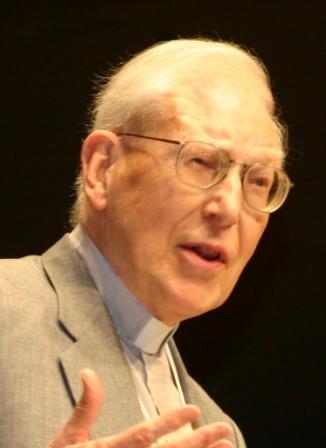
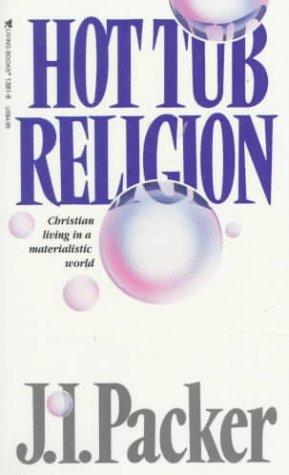
In his excellent (though unlikely titled) book Hot Tub Religion, J. I. Packer asks “What would a work of divine reformation in our churches today look like?” Great question, and I loved the six answers Packer—one of my all- time favorite people—offers.

J.I. PackerFirst, there would be a sense of biblical authority—that is, an awareness that biblical teaching is divine truth and that the invitations and admonitions, threats and warnings, promises and assurances of Scripture still express the mind of God toward mankind. The Bible would be honored again as the Word of God, and the perverse, pluralism of liberal theology, which addles the brains and blinds the hearts of many, would wither and die. The root of this pluralism is that teachers feel free to ignore some of the things the Bible teaches and to pull others out of context. The fruit of it is that God’s people are led astray into dry places and the Holy Spirit of God is completely quenched. Reformation always begins as a call from God to “come out of the wilderness” of subjective speculation and spiritual impotence and learn again in humility the true teaching of the written Word about grace and godliness, knowing that the secret of power for living lies here. Thus, unhappily, reformation always leads to controversy for some resist the message.

Second, there would be a spirit of seriousness about eternal issues. Heaven and hell would be preached about, thought about, and talked about once again. Life in this world would once again be lived in the light of the world to come, and the Philippian jailer’s question, “What must I do to be saved?” would be seen as life’s basic question once more. For most of this century the church, liberal and conservative, in all denominations, has been so occupied with this world that minds turned to eternity have been the exception rather than the rule. Sociopolitical, cultural, sporting, and money-making interests have dominated Christian minds rather than the laying up of treasure in heaven. A work of reformation would change that, not by withdrawing Christians from these fields of action, but by radically altering their perspective on what they are doing so that God’s glory and eternal values would become the chief concerns.

Third, there would be a passion for God, transcending any interest in religion or cultivation of religiosity. One’s relationship to God would be seen as the most important thing in the world, and a Bible-based awareness of the greatness and awesomeness of God, the eternal Savior-Judge, in whose hands we ever are, would displace all cheap thoughts of God as just a useful pal.

Fourth, there would be a love of holiness growing out of deep conviction of sin, deep repentance, deep gratitude for forgiveness and cleansing through the blood of Jesus Christ, and a deep desire to please God. Casualness about righteousness, cutting moral corners, areas of blatant self-indulgence, love of luxury, and broken commitments have disfigured twentieth-century Christianity at all levels. This would change, as indeed it needs to, for moral standards among Christian people. As in the world around them, seem to be getting worse rather than better. It is frightening to see how little believers nowadays seem to be bothered about personal sin.

Hot Tub ReligionFifth, there would be a concern for the church. Christians would catch the biblical perspective, in which the church is the center and focal point of God’s plan and the display ground of his saving and sanctifying wisdom (see Eph. 3:1-12). They would be deeply concerned about the image that the church presents to the world, and any form of unfaithfulness, carnality, false doctrine, formalism, disorder, or wrongheadedness in the church would cause them distress and send them to their knees. God should be honored, not dishonored, in his church, and the church should show itself strong in standing against the world and testifying to its Savior. These are universal Christian concerns at reformation times, and saints at such times will endure and risk anything in order to see the church move in the right direction.

Sixth, there would be a willingness to change—whether from sin to righteousness, or from lassitude to zeal, or from traditional patterns to new procedures, or from passivity to activity, or any other form of change that was needed. Believers would come together to praise, pray, encourage each other, and see what they could do together to advance the cause of Christ. It would be as if they had awakened after a long sleep. They would wonder how they were able to be somnolent, apathetic, and inactive for so long. What new things they would find themselves doing cannot be specified in advance beyond this general formula, but should God work in reformation, it is safe to say that newness of discipleship and change of ways in some shape or form would be the experience of us all.

Randy's signature

Blog Facebook Twitter

Saturday, February 25, 2012

John Fletcher on Checking Your Heart


John Fletcher's heart check questions

By Rev. Mark O. Wilson | Released: Feb. 24, 2012 | In: Feature Holiness

My hero, John Fletcher, the 18th century Vicar of Madeley, was a seeker after God. His heart's desire was to press in to love Him more fully.

When I visited his grave a few years ago, I prayed, "Lord, make me a John Fletcher."

He drew up this list of questions for personal reflection at the end of the day:

1. Did I awake spiritual, and was I watchful in keeping my mind from wandering this morning when I was rising?

2. Have I this day got nearer to God in times of prayer, or have I given way to a lazy, idle spirit?

3. Has my faith been weakened by unwatchfulness or quickened by diligence this day?

4. Have I this day walked by faith and eyed God in all things?

5. Have I denied myself in all unkind words and thoughts? Have I delighted in seeing others preferred before me?

6. Have I made the most of my precious time, as far as I had light, strength, and opportunity?

7. Have I kept the issues of my heart in the means of grace, so as to profit by them?

8. What have I done this day for the souls and bodies of God’s dear saints?

9. Have I laid out anything to please myself when I might have saved the money for the cause of God?

10. Have I governed well my tongue this day, remembering that “in a multitude of words there wanteth not sin”?

11. In how many instances have I denied myself this day?

12. Do my life and conversation adorn the Gospel of Jesus Christ?

Rev. Mark O. Wilson is senior pastor at Hayward Wesleyan Church in Hayward, Wisconsin.

Bookmark and Share

Thursday, November 24, 2011

10 Things to be Thankful For on Thanksgiving Day

Subscribe to this newsletter here.

10 Basic Blessings You Should Be Thankful For

E-mail Print PDF
685 69

Americans today face economic challenges, but we have nothing to complain about.

We Americans are a blessed people, but we are also spoiled. I know I am. I can get flustered over the stupidest things—like when my cellphone doesn’t get a good signal, when a flight is delayed or when my computer takes too long to load a website. Most people in the world don’t have iPhones, can’t afford air travel and don’t have computers. My impatience reveals my ungrateful spirit.

So how can we avoid this virus of selfish immaturity? Thankfulness is the antidote. It melts our pride and crushes our sense of entitlement. It reminds us that everything we have comes from God, and that His mercy is the only reason we are blessed.

"Be thankful instead! God calls us to live above negativity. When we give thanks in all things, God gives us a supernatural attitude adjustment.”

As you celebrate Thanksgiving Day, I pray you will invite the Holy Spirit to convict you of any whining. Here’s a list of 10 blessings that many people in the world don’t have. Go over this list and then see if you still have anything to gripe about.

1. Got clean water? The next time you uncap a bottle of water or grab a drink from the tap, remember that one in eight people in the world (that’s 884 million people) lack access to clean water supplies. Millions of women around the world spend several hours a day collecting water. When you take a five-minute shower, you use more water than a typical person in a developing country uses in a whole day.

2. Do you have a bathroom? About 40 percent of the world's population (2.6 billion people) do not have toilets. Lack of sanitation facilities spreads disease and is a major reason why more than 2 million people die annually of diarrhea.

3. How’s your electricity? The power in my house might be interrupted briefly three times a year because of Florida storms. But 1.6 billion people—a· quarter of humanity—live without any electricity. And, because of unreliable infrastructure, at least 2 billion people on earth don’t have any light at night.

4. Got a roof over your head? One billion people live in slums. That's almost one-sixth of the world’s population. Of this total, 640 million children live without adequate shelter; they live in cardboard boxes, tin-roofed shacks, one-room mud huts or filthy, crowded tenements. It’s been estimated that 1.4 billion people will live in slums by 2020. Meanwhile here in the United States, between 2.3 to 2.5 million people are classified as homeless.

5. Is there food on your table? In the United States we are battling an obesity epidemic. Yet according to UNICEF, 22,000 children die each day due to poverty. Approximately 790 million people in the developing world are chronically undernourished, and almost 28 percent of all children in developing countries are estimated to be underweight or stunted.

6. Got a stove? In developing countries, some 2.5 billion people use fuelwood, charcoal or animal dung to meet their energy needs for cooking. In sub-Saharan Africa, more than 80 percent of the population depends on these crude, traditional means for cooking, as do over half of the populations of India and China. The really sad part: Indoor air pollution resulting from the use of solid fuels claims the lives of 1.5 million people each year, more than half of them below the age of 5.

7. Got regular income? You may have had to take a pay cut during the recession. But keep in mind that at least 80 percent of humanity lives on less than $10 a day. The world's average income is about $7,000 a year. Still, only about 19 percent of the world's population lives in countries with per capita incomes at least this high.

8. Did you go to school? Nearly a billion people entered the 21st century unable to read a book or sign their names. Enrollment data shows that about 72 million children of primary school age in the developing world were not in school in 2005 (and 57 percent of them were girls).

9. Are you generally healthy? Americans face illness like people in other nations—and more than 12 million Americans are battling cancer in any given year. But many of us have access to health care. In the developing world, more than 2.2 million children die each year because they are not immunized. An estimated 40 million people in developing countries are living with HIV/AIDS. Every year there are 350–500 million cases of malaria, with 1 million fatalities, mostly in Africa.

10. Are you free to worship God? More than 400 Christians die for their faith every day around the world, and most of these believers suffer in Islamic countries—although the top hot spot for Christian persecution, according to Open Doors International, is the atheist regime of North Korea.

What will you be grateful for this Thanksgiving? In these tough economic times you may feel the urge to complain. Be thankful instead! God calls us to live above this negativity. When we give thanks in all things, God gives us a supernatural attitude adjustment. When we thank God for all He has given us, acknowledging that we don’t deserve His goodness, our grumbling melts into gratitude and our impatience turns to praise.

J. Lee Grady is the former editor of Charisma. You can follow him on Twitter at leegrady. His most recent book is 10 Lies Men Believe (Charisma House).

Friday, November 11, 2011

What Will Your Obituary Say?


FIRST-PERSON: What will your Obituary say?
By Candi Finch / Baptist Press

FORT WORTH, Texas (BP) -- What would your obituary say if you were to die today? What would your legacy be? Would people remember your passion for Christ, your love for others, your heart for the outcasts? Or, would they remember your negative attitude, your short temper, your sharp tongue? What would your family say about you? Your friends? Your teachers?

These questions are ones I have often posed over the past few years to the teenage girls I have taught in my local church. I am convinced the reason many students (and adults, for that matter!) do not live consistently for Christ is that they do not think about the eternal impact their lives can have, and they do not think a single life can make much of a difference anyway.

For close to 15 years, I have watched students start their high school years so strong for Christ only to finish poorly, many even dropping out of church before they graduate high school. It breaks my heart as I watch my girls that once had a burning passion to impact their school for Christ get sidelined because worldly things took their focus off of the Lord. I remember one girl in particular that I led to the Lord when she was a freshman, had in Sunday School, and met with in a small discipleship group. She regularly brought lost friends to church. However, she started dating a boy her senior year who wasn't a Christian, and that one decision to date a non-Christian took her down a disastrous path. She stopped talking about her faith and attending church because she didn't want to alienate her new boyfriend.

So, a few years ago, I started having my students write their own obituaries at the end of their freshman year in high school so they would think about how important the choices are that they make on a daily basis. Then, I spent time with them walking through some famous "obituaries" found in Hebrews 11. These testimonies left behind in Hebrews help believers today realize that the legacies of their lives can last generations. In this day, we need more Hebrews 11 type of Christians. The point is not that our names would be known but that we would live in such a way that Christ's name is known because of our lives.

The truth is, though, that it is not just high school students who need to examine their lives to see if they are building a legacy of faith. We all should be asking ourselves: If today was my last, would the legacy of my life be one that honored the Lord? Consider the "obituaries" of the people recorded in Hebrews 11:1-40:

1. They had a good reputation (vv. 2, 39). Both of these verses note that the people had a good reputation because of their faith. What is your reputation? Is it as someone who loves the Lord and cares for others? Or, do people know of you for less desirable reasons?

2. They were remembered by people who came after them (v. 4). One of the beauties of the Bible is that it records for us the lives of those who "though dead, still speak." Women in Scripture like Ruth, Esther, and Lydia and women in church history like Amy Carmichael, Ann Judson, and Elizabeth Elliott spur us on because of their example of faith. My grandmother and my pastor's wife were such women who, because of their lives, I am encouraged to live for Christ.

3. They were known as people who pleased God (v. 5). Someone who pleases God seeks to honor the Lord before any other. This is the type of girl who doesn't seek popularity at the cost of her convictions, who doesn't date boys who are unbelievers, and who seeks to honor God in the way she dresses and talks. She uses her time to deepen her relationship with God and makes daily time in God's Word a priority.

4. They had confidence in God (v. 10). When you are bombarded daily by the message of the world, it can be hard sometimes to trust that doing things God's way is best. However, when God says, "Do not have any other gods before me" (Exodus 20:3) or "be slow to anger" (James 1:19) or "honor your father and mother" (Ephesians 6:2) or adorn yourself "with proper clothing, modestly" (1 Timothy 2:9), do you have confidence and trust in His guidance for you?

5. God was not ashamed to be called their God (vv. 13-16). When one day in the future my family member sits down to consider my life and pen my obituary, this would be the one thing I want said of me -- that God was not ashamed to be called my God.

6. They resisted sin by keeping their eyes on God (vv. 24-27). The temptations to sin are ever present in your life and my life, but God has promised us in His Word that no temptation will be so great that a way out will not be provided (1 Corinthians 10:13). The challenge for us is to keep our eyes on Him in the midst of these temptations! One thing that has really helped me is memorizing Scripture for those sins I know I struggle with, and I have even put Scripture cards up in my car, on my TV, and in other places in my house to remind me. So, before I think of speeding in my car or getting angry at careless drivers, God's Word greets me from the dashboard. Before I think about watching anything on TV that is unwholesome or that may cause me to sin in my thought-life, God's Word beckons to me above the screen.

7. They were used by God in the midst of difficult circumstances (vv. 32-34). The phrase in this section that encourages me so much is that "their weakness was turned to strength." In high school and early in college, I was terrified of public speaking and had difficulty sharing my faith. Yet, I remember time after time how God opened doors for me to witness for Him -- to entire classes through assigned speeches, to my principal in his office because he had questions about a Christian club I was president of, and to teachers and classmates with whom I had built relationships. In each instance, when I trusted Him instead of giving into fear, I was able see Him do great things.

8. They withstood persecution and ridicule for their faith (vv. 35-37). Today, all around the world, brothers and sisters in Christ are persecuted and killed for their faith. I read an article recently about a group of 26 Christians who were murdered in Cairo, Egypt during a demonstration. I often ask myself if I would have the conviction and courage to stand in the face of such circumstances. Maybe a more appropriate question, though, is whether I have the courage and conviction to live for Christ in my own context?

So, I ask again, what would your obituary say if you died today? Consider the eight characteristics found in Hebrews 11 and ask yourself which of those could describe your life. May we all be remembered as Hebrews 11 Christians!

Candi Finch is a Ph.D. student and an adjunct professor in the Women's Studies Program at Southwestern Baptist Theological Seminary in Fort Worth, Texas. This column first appeared at BiblicalWoman.org, a blog of Southwestern Baptist Theological Seminary.

Copyright (c) 2011 Southern Baptist Convention, Baptist Press www.BPNews.net

Monday, October 31, 2011

"Jumping the Shark!"


A Message for Reformation Sunday

by Keith Kiper

Who will be saved?

22 Jesus traveled through cities and villages teaching and making his way to Jerusalem. 23 Someone said to him, “Lord, will only a few be saved?”

Jesus said to them, 24 “Make every effort to enter through the narrow gate. Many, I tell you, will try to enter and won’t be able to. 25 Once the owner of the house gets up and shuts the door, then you will stand outside and knock on the door, saying, ‘Lord, open the door for us.’ He will reply, ‘I don’t know you or where you are from.’ 26 Then you will begin to say, ‘We ate and drank in your presence, and you taught in our streets.’ 27 He will respond, ‘I don’t know you or where you are from. Go away from me, all you evildoers!’ [a] 28 There will be weeping and grinding of teeth

when you see Abraham, Isaac, Jacob, and all the prophets in God’s kingdom, but you yourselves will be thrown out. 29 People will come from east and west, north and south, and sit down to eat in God’s kingdom. 30 Look! Those who are last will be first and those who are first will be last.”Luke 13:22-30 (CEB)


What comes to your mind when you think of Martin Luther and the Diet of Worms? Was this an early form of a fad diet in 15th century Germany? After all, just a few years ago you could find advertisements in magazines for tapeworms.

Just swallow a few of these, the ad would say, and you can lose weight without really trying. Our brand is even hygienic for your good health, it would say! But, a Diet of Worms? Our form of the English language can be a fascinating thing. We can only imagine how strange it seems to others when they attempt to learn and speak our brand of English.

Martin Luther, as many of you well know was the father of the Protestant Reformation. Martin was born in eastern Germany in 1483. This was only some forty years after Johann Gutenberg invented the printing press. Martin Luther protested some of the practices in the Catholic Church of that time. A diet was a judicial hearing or court. Worms was the German city where the trial was to be held. And now, as the late Paul Harvey would often say, you know the rest of

the story.

History demonstrates that at various times and different locations, the Christian church has veered off and even jumped the track. God calls out men and women, grounded in His Holy Word, the Bible, to steer the Christian Church back into the right direction. He has done this from Old Testament times until the present age in which we now live. The bigger question is whether the church of today will listen.

Recently, a well known television pastor and evangelist was asked what he thought about the Mormon faith. This was in response to recent criticism of a particular political candidate.

The tele-evangelist’s ( Click this link to hear what he said) answer seemed logical, and probably sounded OK to much of today’s Biblically illiterate culture. He said he probably would not agree with everything he Church of Latter Day Saints would teach. He went on to say that they were probably not the purest form of Christianity…that recognizing Jesus as the Son of God was the most important thing. The thing this well known evangelist neglected to consider is that while the Mormon Church claims they believe in the sinless, virgin birth of Jesus Christ, they do not believe this happened by any miraculous means. This is important because for Jesus to be born without sin, the Holy Spirit's role in His conception is of utmost importance.

All genuine Christianity is built on the foundation of what seemed to be a small detail to him. God sent His perfect, sinless Son, born of a virgin to be a sacrifice for mankind’s sin. Christ became sin for us on the cross at Calvary that we might have eternal life. The virgin birth is of utmost

importance because sin is passed through the blood of each generation. Because Mary was impregnated by the Holy Spirit, Christ was born without sin.

Back in the 1970’s there was a popular television called Happy Days. As with most television shows, ratings decline the longer a program remains on the air. In an effort to gain a ratings boost, the Happy Days gang went on a beach vacation. In one particular scene Fonzi is seen wearing his famous leather jacket while on water skis. Still on the skis he then jumps over a shark to the cheers of everyone on the beach. Because of this particular scene, movie and television critics invented a new name for programs that leave common sense behind and go of

f into a strange direction. It’s called “Jumping the Shark!” My friends, there are many churches today that have jumped the shark!

The bigger question today is…how do we as a The Church get back on track? God's Revivalist and Bible Advocate magazine recently published their Call to the Conservative Christian Holiness Movement in the October 2011 edition. They make some excellent points and the article is worth reading. I mention this because I was inspired by their call and this affected some of my following points. I would like to focus on several things today that I personally believe would get our church and nation headed back into the right direction based on God’s Word.

I. A Return to Christian Community: When I say church, I’m talking about the church as a whole. I’m not criticizing our church, Boonville Wesleyan Church. We are just a part of a much larger picture, Christ’s church, the entire Christian Community. Union with Christ establishes our membership in His Church, the community of the faithful. I’m afraid that because many times we as Christians have put so much emphasis on a personal relationship, that we forget we are all called to work together to be the light of the world. As an individual we belong to Boonville Wesleyan Church. Our church is part of the Indiana South District of The Wesleyan Church. Our district is part of The Wesleyan Church USA. And of course, all churches that believe that Jesus is Savior and Lord are part of the Kingdom of God. The first step the church of today must take in getting back on track is accountability. There will be no denominations in heaven. We must remain true to the Word of God and in fellowship with the entire Christian Community of believers that are striving to do the same.

II. A Return to Christian Social Witness: What do I mean when I speak of a social Christian witness? John Wesley once said, ”Any religion that can be concealed is not Christianity.” What do you think Wesley meant when he made that statement? As you study his life it becomes quite clear. The England of Wesley’s day had become very corrupt. Alcoholism was very rampant in the streets. Children could be hanged for stealing rabbit from a gentlemen’s estate. Not much different than today is it? Florida is the leading state to treat children as adults with over 300 under the age of eighteen in the adult prison system. Florida is followed closely by Texas. I’m sorry folks, regardless of the crime, a twelve year old boy is not an adult and does not deserve life in prison! I would not want to be in the judge’s shoes who sentenced a child for personal political gain when the King of Kings judges him. Jesus tells us about the fate of those who mistreat children. And just as the early Wesleyans constantly decried the evils of slavery…we should cry out to God for our leaders who justify the nearly 4000 thousand children who are murdered each day in their mother’s womb. God tells us clearly that the children’s innocent blood cries out from the ground to Him.

Early Wesleyans and like-minded Christians of other faiths worked to reform the prison system, end slavery, and feed the poor. A Social Gospel is putting into action what we believe and know in our heart is right based on what the Bible clearly shows us. . That is what it means to be salt and light. This is putting the golden rule into action. True revival brought about the needed social change in England. The answer to America’s problems is true spiritual revival, not more laws and political rhetoric.

Many would look for a political or presidential candidate to solve the problems.

Someone once said,” Why do we choose from just two people to run for president and fifty for Miss America?” Good question!

Both major political parties have had periods of time when they experienced complete control with the presidency and both houses of congress. If being democrat or being republican were the only answer, then our problems should have been solved by now. If you seek God in honest prayer, He will guide you in selecting a candidate, nationally or locally.

In spite of billions of dollars pouring in every year, our public school system has become a disaster. Abraham Lincoln said that the classroom of one generation will become the government of the next one. The great reformer Martin Luther recognized the problem nearly 500 years ago when he said, “I am afraid that the schools will prove the very gates of hell, unless they diligently labor in explaining the Holy Scriptures and engraving them in the heart of the youth.”

Dr. Leon Henson said, ”Whenever the Christian lives an authentic life, the world around is permeated with God’s presence… The pure in heart not only see God, but become letters through which society sees Him.”

III. A Return to Consistent Discipleship: Jesus commanded His followers to make disciples by baptizing them and instructing them in all His commands. The early church responded to Jesus’ call to evangelize by taking the Gospel to every corner of their known world. They also realized that the most effective evangelism was the one on one training of new converts as disciples. With the advent of satellite TV and the internet we might assume that most of the known world has been reached with the Gospel of Christ. The statistics from a recent survey might surprise you. I quote from Dr. Ronnie Floyd of The Church Report.com You can check out this new link on our interactive blog for current events affecting the Christian Church.

“We must understand the numbers when it comes to those around the world who believe the gospel of Jesus Christ. I served on a task force that assessed our efforts to take the gospel to the world and the statistics we uncovered are heartbreaking. Only 11 out of every 100 people in this world are willing to claim Jesus as personal Lord and Savior. We also discovered that just over 50% of the world’s population (approximately 3.5 billion people) has no realistic opportunity to hear the gospel at present. The statistics are bad and will continue to get worse unless Spirit-filled Christians begin to act with urgency.
We must organize and execute an effective strategy for taking the gospel to the ends of the earth. We have one gospel but thousands of people groups and billions of individuals. Our urgent need is for strategic ways of reaching each one. Perhaps the best solution is to plant new churches. Churches that are ready to address languages, cultures, and needs. Here is a sobering thought: We simply cannot reach billions of people with our current means. Every existing church should be planting multiple new churches.”

If I were to ask each of you that are here today why you attend Boonville Wesleyan…most of you would tell me it was because a friend or family member invited you. If there is any hope for the church to reach the lost, we must train and disciple new workers to go out into our world. I personally believe we here at Boonville with God’s help and direction are making that effort. I never really cared for the word laity, because I believe in a certain sense we are all ministers. God has called each and every one of us to fill a particular niche in His Kingdom.

IV. A Return to Hope: If one were to look only at some of the things we talked about today the picture would seem quite gloomy. Its not over yet, is it? All the Christian life in centered in the blessed hope we have in Jesus Christ. Never before in this world have we needed a renewed sense of hope like the hope we can have in Him! As Christians soldiers we must not retreat but fight to the end.

We must stick together and remain true to God’s Word. A recent writer for God’s Revivalist magazine summed it up well. Listen to what he said:

“ The same power which brought the Roman Empire to bow before the cross,renewed the Church in the days of the Protestant Reformation, and reshaped the culture in the Wesleyan Revival is also ours today….as we encounter the moral depravity of our times. Let us be joyfully faithful, then, creatively relevant, and utterly confident that Jesus’ victory is our own. With gladness we do the work which he has given us, even as we await the consummation when all the earth shall echo,”Alleluia, The Lord God Omnipotent reigns!”