Showing posts with label Christian witness. Show all posts

Monday, April 9, 2012

"Truth Decay?"-Choosing Your Standards


Guest Sermon Series
Rev. Robert D. Shofner
St. John's UCC- Boonville Indiana

One thing that basically everybody in our society agrees with today ... whether we’re liberal, conservative, Democrat, Republican, Christian, atheist, whatever ... the majority of people today would agree that our nation is in a state of moral decline.

What is the cause of this crisis of values in our society? Two words. Truth decay. The fact is, we no longer value the truth in America. Instead, we value convenience ... is it easy? And we value pragmatism ... does it work? People don’t really care about the truth. In fact, many question, “Is there such a thing as truth?” They say, “What I really want to know is ... does it work and is it easy? And if it works in my life, and it’s easy, I don’t care of it’s true or not ... that’s good enough for me.”

This represents a major shift in values over the last fifty years in our society. Then, there was almost universal agreement about what was truth, what was right, and what was wrong, and what was truth. Today, though, is very different. There are many in our society today who say there is no such thing as right and wrong; there are no standards by which you can evaluate your life or your behavior.

Why is it that we went from general agreement on “This is true” to where we are today? What happened? We were sold a bill of goods. We fell for three very destructive philosophies that have replaced truth in our society.

The first is individualism. Individualism basically says, “I live for myself. Only I can be the standard for my life. Only I can judge what’s really true. Only I can judge what’s right or what’s wrong. And you don’t have any right telling me what’s right or wrong or true.”

This is nothing new. Individualism has gone on in nations for thousands of years. In fact, a long, long time ago, Israel fell into this same trap. Why? Judges 21:25, “In those days Israel had no [authority] so the people did whatever seemed right in their own eyes.” Does that sound vaguely contemporary?

“I’ll just do whatever I think is right! And since there is no authority, no rules, no standards, no absolutes, I can do whatever I want.” That’s an easy philosophy to hold on to because it means I never have to feel guilty. Because I don’t have to measure up to your standards, and if you say, “This is right.” ... Well, that may be right for you, but ... for me ... I am an individual and I run my own life.

The result of that in the nation of Israel was anarchy and chaos ... and that will be the result in our country if we keep heading off that way. Because anything goes. The only thing that matters is me.

The second philosophy that we’ve bought in to is called secularism. Secularism can be summarized in three words, “God is unnecessary.” It doesn’t mean I don’t believe there is a God ... “Oh, I believe in God” ... I just don't need Him in my life. And we have been systematically removing God from every area of public life. Out of the schools, out of the government, out of the media. God is unnecessary.

Fifty years ago most school rooms had the Ten Commandments hanging on the wall. Fifty years ago most classes began with prayer. Fifty years ago more people went to church than didn’t go to church. Today, it’s exactly the opposite. Obviously there’s no Ten Commandments or prayer in schools. And the majority of people don't go to church. So where are they getting their morals? Jerry Springer? ... where you take the most bazaar creatures found on the planet, put them on stage, and say, “This is normal!”

Drag biker queens from Mars who are Nazi feminists. Amazing. And the audience sits there and says, “Oh, yeah, this is great.” The number one purveyor of values today is not God or the Bible or church or even parents. It’s television.

Secularism, where God is made unnecessary, is talked about in the Book of Romans, chapter 1 where it says, “They exchanged the truth of God for a lie, and worshipped created things rather than the Creator.” (Romans 1:25) That last part is called “materialism.” When we worship things rather than the God who created everything. That’s why there will be more people at the river or casino today rather than worshipping God. A lot of people worship their boat, or bike, or house, or career ... anything that is created, rather than worshipping the Creator. So God is unnecessary and I live for myself.

The third philosophy that we’ve fallen prey to is called relativism. It can be summarized in two words, “no absolutes.” The idea behind relativism goes like this. “You know, what’s true for me may not be true for you. And what’s true for you may not be true for me. Therefore, what’s right for you may not be right for me, and what’s right for me may not be right for you. And nobody can say what’s right or wrong, because all truth is relative.” Again, that’s a great way to avoid guilt, because we can always say, “Well, that’s your standard.”

This belief is revealed in a lot of familiar phrases, like: “It doesn’t matter what you believe, as long as you sincerely believe it.” Whenever I hear that, I want to say, “Oh, really?”

Let’s say, after church, you head out to Louisville and get on the freeway. And you start up what you sincerely believe to be the “on” ramp. But the truth is ... it’s really the “off” ramp. Now, is sincerity enough to keep you from having an accident? No. Does the truth matter in that situation? Absolutely. So, you’re driving up this “on” ramp, which is really an “off” ramp, and some guy is driving off the freeway ... he rolls down his window, and yells at you, “Wrong way!” And if you believe in relativism, you say, “Well, who are you to tell me what’s wrong? Who made you the judge of my life? It may be true for you, but it may not be true for me. For you, this may be an “off” ramp; for me, it’s an “on” ramp. So, don’t be so judgmental and narrow minded!”

A little secret ... when people tell you the truth, they’re not judging you, they’re being kind. There are very few people today who will level with you and tell you, “Look, you’re going down the wrong track. You keep it up, you’re going to blow it. You’re headed for a major head-on collision.” The people who tell you the truth are those who love you.

Another phrase that’s common to relativism is this: “There are no absolute truths in life.” In one of my college classes, the professor stood up in front and said, “There are no absolutes in life.” I raised my hand and said, “Are you absolutely sure about that?”

Don’t ever let anybody “con” you with pseudo-intellectualism. “There are no absolute truths.” That is not only illogical, it’s irrational. It’s illogical, because that statement in itself is an absolute. “There are no absolutes.” You just stated one, which means it’s wrong. (Think that through, now.) You cannot make an absolute statement that there are no absolutes. That’s illogical. And it’s irrational, because the fact is, the whole world proves that the world is built on things you can depend on because they are absolutely true.

For instance, there is an absolute truth called gravity. What if, say every eight or nine minutes, God turned off gravity? We’d all be floating around the ceiling. One of the reasons we build chairs is because we can depend on gravity to pull us down and something needs to hold us up.

Let’s say you come down with bronchitis. The doctor gives you a prescription, you take it to the pharmacist, and she gives you medicine for schizophrenia. You say, “I don’t need this!” “Well, there are no absolutes, so I thought this medicine would be as good as any other. In fact, you look a little neurotic, so I thought you should take this. And I thought that the dosage was little weak ... it’s prescribed for 80 milligrams ... so I thought I’d up that to 3,000 milligrams. It may kill you, but I don’t really care, because everything is relative, and truth is evasive.”

When you go to a pharmacist, are you interested in absolute truth? Yes. You want just the right amount of just the right medicine, because not every medicine will do, and every medicine is not equal.

Truth is narrow, folks. And God wants us to know the truth.

In our society today, which is dominated by relativism, the highest value is tolerance. And we value tolerance more than truth. We don’t want to say the truth, because we may offend somebody, they may disagree with us. So, what we’re supposed to do is tolerate each other. The worst sin in our society is to be intolerant. The worst thing to be called is “judgmental.” “You’re narrow-minded, judgmental, intolerant.” Friends, it’s not judgmental to tell the truth.

The word “tolerance” has been re-defined by our society. Look it up in the dictionary, and you’ll find, “The capacity for or the practice of recognizing and respecting the beliefs or practices of others.” Even if one disagrees with those beliefs or practices. The Bibles teaches that, as believers, we are to be tolerant. We should never treat people as less than human. Even the worst criminal ... or the person with the most immoral lifestyle ... we are to treat them with love and dignity. Jesus did. Jesus accepted people without approving of their lifestyle. He didn’t say, “Do whatever you want, it doesn’t matter.” It does matter. But He treated them with dignity. So, we’re called to be tolerant ... in the old meaning of the word.

Now tolerance means that every idea is equally valid, equally true, and that every lifestyle is equally right. That is not true. That is false. It is not true that every lifestyle is equally valid. It is not true that every thought or idea or belief is equally true. Because truth is narrow.

The ultimate expression of this new definition of tolerance is called “Political Correctness.” God has something to say about that. Ephesians 4:17-19, “They are hopelessly confused ... Their closed minds are full of darkness; they are far away from the life of God. They don’t care anymore about right and wrong.” They just don’t care. You see, some people are so open-minded their brains fall out. And some open minds need to be closed for repair. They’re not even thinking. Think, people! Don’t be conned by these pseudo-philosophies that lead to a dead end. That’s the cause.

So, what’s the cost? What’s the cost of not having any standards, not having any values, and not even agreeing on what’s true, right, and wrong. The cost is ... our culture is collapsing. And it’s amazing to me that the people who are noticing this are not the religious leaders, but the secular press. A great book clearly addressing all this is The Enemy at Home by Dinesh D’Sousa. In our magazines, a couple of cover stories ... “Everybody’s Lying ... Honest!” “Busybodies and Crybabies. What’s Happening to the American Character?” That’s a good question. The answer is found on another magazine cover, “The Generation That Forgot God.” That’s what happened. And if there is no God, then there is no standard of truth; and if there is no standard of truth, then anything goes.


Ever play Scrabble? Let’s say you invite me over for a game of Scrabble, and I come up with the word “Snipple-fritzer.” And you say, “That’s no word.” I say, “It’s a word to me. And it’s worth 57 points! Because it uses the ‘Z’.” At that point, we have to go to an objective authority called “Webster’s Unabridged Dictionary of the English Language.” And if “Snipple-fritzer” is in that dictionary ... I don’t care what you think ... I get the points. But, if it’s not in the dictionary ... it doesn’t make any difference if I like it or not, it’s not a word ... I don’t get the points.

The Bible, God’s Word, tells the truth. There’s a lot in the Bible that I don't understand ... there’s a lot that’s not easy to do. But it is the truth. Because it came from God. And if we say something that’s contrary to the truth ... guess who’s wrong?

Isaiah 5:20, “Destruction is certain for those who say that evil is good and good is evil; that dark is light and light is dark.” God is not mocked. Whatever we sow, we’re going to reap. And what we see happening today is the reaping of what we’ve sown over the years. “A nation without God’s guidance is a nation without order.” Proverbs 29:18

To wrap this up, the question is not, “How can I change society?” but rather, “How can I live a life of value in a world that can’t even decide what’s right and wrong? And how can I raise my children with values when their teachers can’t teach basic values of what is right and wrong because of individualism, secularism and relativism? What do I do?” Psalm 11:3 says, “When the foundations of life are undermined, what can good people do?” Here’s the cure ... rebuild the foundation.

Rebuild the foundation of your life, your family, your business. And that means start with God. Why? Because God is truth. What makes something wrong? Because we say it’s wrong? No, because it’s anti-God. It’s against His character. God is honest, so when we’re dishonest, it’s wrong. God is faithful, so when we’re unfaithful, it’s wrong. God is just, so when we’re unjust, it’s wrong. When we are different from the character of the Creator who made us ... it’s wrong. When we are like the character of the Creator who made us ... it’s right. That make sense? That’s how we decide what truth is. Proverbs 2:9, “God shows how to distinguish right from wrong, how to find the right decision every time.”

Just one last thing. Each of us wants to make a choice: What will my standard be? What I think? What the world says? The values of individualism, secularism and relativism? Or God’s Word?

Let‘s bow our heads:


Father, I’m so thankful that You always tell the truth. It’s not always easy to hear, but it’s always the truth. Today, may we be people who say, “My standard for deciding right from wrong, for deciding what’s true, is God. Not public opinion, and not even what I feel is right, or even what’s convenient. Help us to build our lives on values that last.”

And the people said, “Amen.”

Friday, March 2, 2012

The Elements in True Reformation


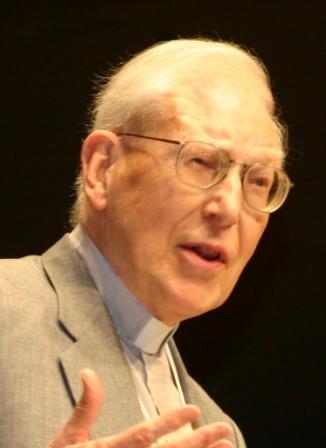
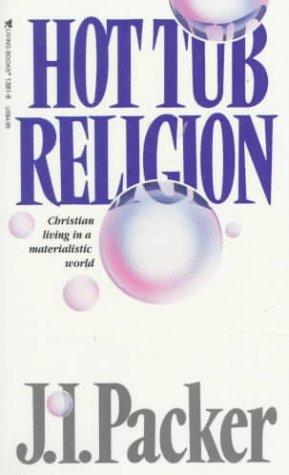
In his excellent (though unlikely titled) book Hot Tub Religion, J. I. Packer asks “What would a work of divine reformation in our churches today look like?” Great question, and I loved the six answers Packer—one of my all- time favorite people—offers.

J.I. PackerFirst, there would be a sense of biblical authority—that is, an awareness that biblical teaching is divine truth and that the invitations and admonitions, threats and warnings, promises and assurances of Scripture still express the mind of God toward mankind. The Bible would be honored again as the Word of God, and the perverse, pluralism of liberal theology, which addles the brains and blinds the hearts of many, would wither and die. The root of this pluralism is that teachers feel free to ignore some of the things the Bible teaches and to pull others out of context. The fruit of it is that God’s people are led astray into dry places and the Holy Spirit of God is completely quenched. Reformation always begins as a call from God to “come out of the wilderness” of subjective speculation and spiritual impotence and learn again in humility the true teaching of the written Word about grace and godliness, knowing that the secret of power for living lies here. Thus, unhappily, reformation always leads to controversy for some resist the message.

Second, there would be a spirit of seriousness about eternal issues. Heaven and hell would be preached about, thought about, and talked about once again. Life in this world would once again be lived in the light of the world to come, and the Philippian jailer’s question, “What must I do to be saved?” would be seen as life’s basic question once more. For most of this century the church, liberal and conservative, in all denominations, has been so occupied with this world that minds turned to eternity have been the exception rather than the rule. Sociopolitical, cultural, sporting, and money-making interests have dominated Christian minds rather than the laying up of treasure in heaven. A work of reformation would change that, not by withdrawing Christians from these fields of action, but by radically altering their perspective on what they are doing so that God’s glory and eternal values would become the chief concerns.

Third, there would be a passion for God, transcending any interest in religion or cultivation of religiosity. One’s relationship to God would be seen as the most important thing in the world, and a Bible-based awareness of the greatness and awesomeness of God, the eternal Savior-Judge, in whose hands we ever are, would displace all cheap thoughts of God as just a useful pal.

Fourth, there would be a love of holiness growing out of deep conviction of sin, deep repentance, deep gratitude for forgiveness and cleansing through the blood of Jesus Christ, and a deep desire to please God. Casualness about righteousness, cutting moral corners, areas of blatant self-indulgence, love of luxury, and broken commitments have disfigured twentieth-century Christianity at all levels. This would change, as indeed it needs to, for moral standards among Christian people. As in the world around them, seem to be getting worse rather than better. It is frightening to see how little believers nowadays seem to be bothered about personal sin.

Hot Tub ReligionFifth, there would be a concern for the church. Christians would catch the biblical perspective, in which the church is the center and focal point of God’s plan and the display ground of his saving and sanctifying wisdom (see Eph. 3:1-12). They would be deeply concerned about the image that the church presents to the world, and any form of unfaithfulness, carnality, false doctrine, formalism, disorder, or wrongheadedness in the church would cause them distress and send them to their knees. God should be honored, not dishonored, in his church, and the church should show itself strong in standing against the world and testifying to its Savior. These are universal Christian concerns at reformation times, and saints at such times will endure and risk anything in order to see the church move in the right direction.

Sixth, there would be a willingness to change—whether from sin to righteousness, or from lassitude to zeal, or from traditional patterns to new procedures, or from passivity to activity, or any other form of change that was needed. Believers would come together to praise, pray, encourage each other, and see what they could do together to advance the cause of Christ. It would be as if they had awakened after a long sleep. They would wonder how they were able to be somnolent, apathetic, and inactive for so long. What new things they would find themselves doing cannot be specified in advance beyond this general formula, but should God work in reformation, it is safe to say that newness of discipleship and change of ways in some shape or form would be the experience of us all.

Randy's signature

Blog Facebook Twitter

Friday, December 9, 2011

When Your Confidence Level is Low


Posted: December 7, 2011
by Stan Parker

Things not going like you’d desire? Well, take this advise: “don’t throw away your confidence; it will soon be appropriately rewarded” (ancient first century writing from a book called Hebrews).

I wonder if we realize that a lot of what we do and say tells others about our confidence level. I can readily think of ten tips on how to increase your confidence level starting right now:

Tip #1: Don’t get down on yourself ! – The more you talk about your perceived inadequacies, the more likely you will become bound by them.

Tip #2: Celebrate being you! – You are special, one of a kind, unique, and you have strengths as well as weaknesses.

Tip #3: Get more decisive! – Start saying yes or no and leave maybe out of any answer. Make up your mind on things and stick with the decision. Just do it.

Tip #4: Remove the words “I can’t” from your vocabulary! Yes you can!

Tip #5: Get a handle on procrastination! – Constructive forward movement gets your energy flowing and makes it easier to continue. So make a move, even a small movement, and keep building your movements into bigger movements.

Tip #6: List your positive points! - Take a pad and pen and write down your positive characteristics and skills. Review them and ask yourself how you can apply one or two of them today.

Tip #7: Volunteer for some group or ministry for two hours a week through the end of this month! – New responsibilities freely given will challenge your life and positively impact others.

Tip #8: Be a dream maker! – Picture yourself doing what you would love to be doing if money was no obstacle. Tell four people about this adventure.

Tip #9: Set some S.M.A.R.T. goals! – To be accomplished, goals must be (at least) specific, measurable, attainable, realistic, and timely. List a few steps necessary to reach two of your goals. Take a step forward today and do one of those steps.

Tip #10: Get into the action! – Act confident, dress confident, look the part, speak distinctly, shake hands with confidence, and walk with confidence. Feel confident!

Stan Parker – The A.I.M. Group: Coaching, Speakers Group, Corporate and Church Turnaround Projects. Contact: stanp@abbgroup-nwa.com.

Friday, June 24, 2011

Turning Bad into Good!


Taking Advantage of Hidden Opportunities in Controversy

By Jennifer Armitage -Wesleyan Life Magazine Online| Released: Jun. 24, 2011 |

Did you know that Christians are not perfect? Okay, so maybe you didn’t fall over in shock, but it’s something Christians regularly have to have conversations about. There is regularly some controversy in the news about Christians, typically having to do with a pastor’s scandal, political lobbying, or the end of the world.

We are called to witness to non-Christians in our daily lives, but there aren't clear guidelines on how to handle those conversations.

With a group of people so broad and diverse in beliefs, theology, interpretations of the Bible, meaning of religion, and even what Jesus’s teachings mean, it’s understandable that there will be Christians with whom you will not agree.

So the question becomes, how do we deal with the public controversy?

We first need to look at it as an opportunity. When conversations about Christian controversy arise at the water cooler, family reunion, or at the bus stop, it’s an opening for you to tell the truth. One of the big problems is that there are a lot of false beliefs about Christians. Through these conversations, we can start to write these wrongs.

The key to utilizing these opportunities is to bring it back to your church and your beliefs. Instead of focusing on the negative, you can guide the conversation to the truth.

When Harold Camping set a date for when he thought the world would end, it caused quite a stir. Everyone was talking about the world ending. They were, in a round-about way, talking about the Bible. What an amazing opportunity this could be to inform them what the Bible does say!

If the conversation is about Christians hating a sinner, it’s an opportunity to explain what sin really is, that God hates the sin and not the sinner, that Christianity is so much about forgiveness, and that even Christians may sin. A big, secular misconception is that Christians don’t consider themselves sinners or struggle with issues of sin.

If the conversation is about another church’s negative actions, then bring it back to what your church does. Try something like, “I really like my church because they don’t do protests. It’s cool because every Saturday my church goes out and feeds the homeless.”

By moving the conversation to positive examples from your own church, you could change minds and hearts. At the very least, you are showing that not all Christians are alike, nor do they always agree with each other’s actions.

I do want to point out that Jesus calls us to be kind and loving . . . and that means to other Christians who are doing things with which we disagree. Bashing and attacking others is not what we are called to do. No matter how frustrated we get.

None of this means that you can’t have a sense of humor about ridiculous things other Christians are doing, or that you have to talk about your church all the time. I especially don’t want people to feel that they need to be “preachy.”

My point is, we don’t have to be scared when Christian controversy comes up. We can turn tough conversations into opportunities to do our job—to introduce people to Christ.

Bookmark and Share

Wednesday, May 11, 2011

About Rev. Russell Coffee and Anchor Point


Anchor Point Foundation "Anchor Point" grew from the effort to find help for one individual who had seriously tried a variety of drug rehabilitation options - with no success. After forty years of evangelistic work, Russ Coffey, himself attempting to help a fellow minister recover from what looked like an endless cycle of rehab programs. No hope seemed possible. The year was 2002. Through a determined belief in Bible-based teachings Russ found that success for this one man was, in fact, possible. The chain of addiciton was finally broken.

From what Reverend Coffey learned in 2002 and 2003, came a string of successful rehab placements in July, 2004. Anchor Point Foundation, Inc. was established as a 501(c3) tax exempt organization. Anchor Point's mission is to offer all who battle life controlling addictions the opportunity for healing and recovery through Christ and a long-term Bible-based residential program for rehabilitation.

In the early days Rev. Coffey sought out conventional methods of rehabilation for those seeking help, among them the 12-Step Method. Although helpful, the Anchor Point Board of Directors agreed that improvements could be made and that an alternative method must be offered. As a result, Anchor Point focused on what became a Christ-centered long-term residential program for the total healing of the invidividual - body, mind and spirit. This led to the development of criticial relationships with large groups of BIble-based rehab centers across the United States.

By simply paying attention to what was truly working - Anchor Point's leadership, in the ensuing years, developed a solid set of referral tools. By utilizing these tools and techniques, on the front-end of a referral, in combination with the selection of just the right residential rehab program, Anchor Point has produced an incredible success rate; to God be the Glory.

With a growing number of clients in long-term residential rehab centers, currently over 400+ clients, Anchor Point realized a need for a weekly support group in the community. The Anchor Point Support Group has become a very important aspect of a client's rehabilitation. Offering real help, not only to perspective clients, but to graduates. Anchor Point assists in meeting the emotional needs of the entire familiy while the loved one is away in recovery.

Anchor Point's work has grown to include it's "Churches Adopting the Recovering," a two year mentoring program for each graduate, and a "12 Steps with Christ" out-patient rehab program and other related programs.
All of this work is accomplished through the dedication of Executive Director, Russell Coffey, the Governing Board, and what has grown to be a Volunteer Staff of 12+ - all very faithful and passionate to the cause. Together as a team, we are committed to serving our community as a non-demoninational, non-sectarian organization for the health and wellness of our Citizens. We are building upon this past work in concert with every church, civic organization and our judicial system for the improvement of our society and community. Successful graduates number around 200 who have prospered, accounting for more then a 95% success rate.

Saturday, April 23, 2011

THE (SCIENTIFIC) DEATH OF JESUS


At the age of 33, Jesus was condemned to the death penalty. At the time crucifixion was the "worst" possible death. Only the worst criminals condemned would be crucified.

Yet it was even more dreadful for Jesus, because unlike other criminals condemned to death by crucifixion, Jesus was nailed to the cross by His
hands and feet, rather than just tied. Each nail was 6 to 8 inches long.

The nails were driven into His wrist, not into His palms as is commonly portrayed. There's a tendon in the wrist that extends to the shoulder. The Roman guards knew that when the nails were being hammered into the wrist, that those tendons would tear and break, forcing Jesus to use His back muscles to support himself and to make it possibe for Him to breathe.
Both of His feet were nailed together, thus, He was forced to support himself on the single nail that impaled His feet to the cross. Jesus could not support himself with His legs for long because of the pain, so He was forced to alternate between arching His back and using his legs just to continue to breath. Imagine the struggle, the pain, the suffering, the courage!! Jesus endured this reality for over 3 hours. Yes, over 3 hours!

Can you imagine this kind of suffering? A few minutes before He died, Jesus stopped bleeding. He was simply pouring water from his wounds. From common images we see wounds to His hands and feet and even the
spear wound to His side... but do we remember the many wounds made to his body. A hammer driving large nails through the wrists, the feet overlapped and a nail hammered through the arches, then a Roman guard piercing His side with a spear. And... before the nails and the spear, Jesus was whipped and beaten

The whipping was so severe that it tore the flesh from His body. The beating so horrific that His face was torn and his beard ripped from His face. The
crown of thorns (two to three inch thorns) cut deeply into His scalp. Most men would not have survived this torture. He had no more blood to bleed out, only water poured from His wounds

The human adult body contains about 3.5 liters (just less than a gallon) of blood. Jesus poured out all 3.5 liters of his blood; He had three nails hammered into His members; a
crown of thorns on His head and, beyond that, a Roman soldier who stabbed a spear into His chest.. All these without mentioning the humiliation He passed after carrying His own cross for almost 2 kilometers, while the crowd spat in his face and threw stones (the cross beam was almost 30 kg of weight, to which His hands were nailed). Jesus had to endure this experience, so that you may have free access to God. So that your sins can be "washed" away. All of them, with no exception! Don't ignore this!

JESUS CHRIST DIED...FOR YOU!

Saturday, April 16, 2011

Bits & Bytes for Bagley Backers-April 2011

Bits & Bytes for Bagley Backers
April 2011
cool
SHE'S TOO FAT FOR ME
Jesse & Selinda

"You can have her. I don't want her. She's too fat for me!" So sang the missionary men at Global Partners' Africa Area Missionary Retreat this month to missionary Jesse Van Horn at a celebration of his engagement to fellow missionary Selinda Ingalls. Not too be outdone, the missionary women responded with a lively version of "Oh Jesse, Oh Jesse, Oh Jesse, Oh" (You're not handsome, it's true, but when I look at you, it's just . . . ) Along with the good-natured humor in preparation for their upcoming wedding (May 28th) the missionary family presented them with gifts and words of wisdom (and some not so wise) all accompanied by strains of violin music provided by Jerry Manwaring.

Another highlight of the retreat was welcoming new missionaries to Africa: Zach, Lyndy, & Isaac Szmara heading to Mozambique who arrived in Africa the day before the retreat began; Lisa Karr, GoNet missionary who has been serving at Bingham Academy in Ethiopia; and Kristen Hodges, intern from Bethany Bible College who has been serving at Jembo, Zambia. We also welcomed Bethany Morse back to Africa to a new appointment in Sierra Leone after an extended study leave.

Missionaries
From the left: Mike & Cindy Helvie, Jesse Van Horn, Dan & Joan Jones, Lisa Karr, Bethany Morse, Fred & Carol Cromer, Selinda Ingalls, Bob & Brenda Bagley, Dorcas Croft, Jerry & Jody Manwaring, Jason, Rachel, & Jocelyn Helm, Orai & Linda Lehman, Phil & Lucille Nettleton, H. C. Wilson, Zach & Lyndy Szmara

Many of the missionaries reported that a major highlight of this year's retreat was that we were privileged to have Global Partners' General Director, Dr. H. C. Wilson with us to minister in the services as well as to bring us up-to-date with what has been happening in the home office. (See photo at end of letter.)


VISAS DENIED

Although we were looking forward to being in Ghana for Easter to join the church there in their celebration of their 20th anniversary, we found out this week that it's not going to be possible. When we went to apply for visas we were told that because we were classified as visitors in South Africa rather than residents, they were unable to issues visas for our trip.

Though disappointed that we won't be there, we are praying that God will meet with His church in a very special way. And we will make plans to celebrate the risen Lord with His people here in South Africa.


AFRICA AREA PRAYER CALENDAR

A prayer calendar for the Africa Area for April - June, 2011 is available online here. Please feel free to print it out and distribute it among those who would be interested in praying daily for the work of Global Partners in Africa.


PRAISE POINTS

  1. Praise God for a very positive Africa Area Missionary Retreat.
  2. Praise God for the safe arrival of Zach, Lyndy, and Isaac Szmara to begin their first term of missionary service in Mozambique.
  3. Praise God for His help as Gauteng District Superintendent Victor Nylungu (South Africa) worked with officials to finally resolve some property ownership disputes.

PRAYER REQUESTS

  1. Pray for Zach & Lyndy Szmara as they face the inevitable adjustment challenges and begin digging into language study.
  2. Please pray for Fred Cromer as he goes to Zambia in early May to confer with National Superintendent Dr Alfred Kalembo about critical ministry issues.
  3. Pray for God's blessing on the Wesleyan Standard Church of Ghana as they gather Easter weekend and celebrate the 20th anniversary of the work.
  4. Please pray for us as we go to Swaziland the first two weeks of May as Bob teaches a church administration course at Emmanuel Wesleyan Bible College. Pray that God will make us a blessing to the students, staff, missionaries, and church people while we are with them

SUPPORT REPORT
We are very grateful to those who have continued to provide the financial support that enables us to remain serving on the field. Although our monthly commitments still only stand at 74% of the amount we need to meet our budget, so far additional giving has been sufficient to make up the difference. Thank you so much for standing behind us.
Donations or monthly commitments can be made online here.

FORWARD TO A FRIEND

You can help us by forwarding "Bits & Bytes" to friends who will be interested in the work of Global Partners in Africa. Just click on the link below. Friends who receive the email will also be given an opportunity to sign up to receive it in the future.

Forward this message to a friend

HCWilson 2

PRINTABLE VERSION

An easy to print version of this email can be found here. Thank you for sharing a print version with others.

Bob & Brenda Bagley
rbagley112@gmail.com

Friday, April 1, 2011

A Call to Holiness...

God's Word

A Call to Radical Holiness

by Kevin Offner

Radical Holiness God calls all Christians to be holy. To be holy or sanctified literally means to be "set apart." Almighty God, in saving us through faith in Jesus Christ, has called us out from the world and set us apart to belong exclusively to him. And our God is jealous over his people: Christians are called to be different from non-Christians.

At the turn of the century, American evangelical Christians were concerned about liberalizing tendencies within the churches. Christians increasingly were seen as not very different from non-Christians in what they believed and in how they acted. Therefore several "fundamentals" of the faith were affirmed by evangelicals - teachings such as the deity of Christ, the authority and inspiration of the Bible and the need for personal rebirth by the Holy Spirit in order to go to heaven - and conservative Christians began to be called "fundamentalists."

Much could be (rightly) said about what was wrong with the fundamentalists. They soon based their distinctiveness on externals rather than on the changed heart God had given them. They defined themselves more and more by what they were against rather than what (and Whom) they were for. Their hatred of sin too often spilled over into a seeming hatred of people, and they were known more for their anger than their love. But there was at least one very right thing about the fundamentalists: they realized that following Jesus meant that they were to be holy, set apart, different from the world.

Where does this "set apartness" need to be encouraged today among students? Here are my thoughts. They are neither exhaustive nor in order of priority. May God raise up individuals and local chapters where courage, not fear, is the defining character quality. May we dare to be counter-cultural out of loyalty to our Lord.

Radical Relationships

"They'll know we are Christians by our love," was the refrain to a popular song among Christians in the late sixties. Non-Christians may (indeed, will) hate us, but the hatred should be because darkness hates the light - not because we come across as arrogant, condescending or angry. The world clamors for its rights and claims "victim" status, but Christians should stand apart by our radical yielding of rights and willingness to suffer for what is right.

We must be quick to forgive. We must stop all lying, all backbiting, all cheap slashing with our tongues. We must go out of our way in doing good to others. And we must put to death all worldly competition, making it our aim to take joy in others' successes.

Whether extravert or introvert, every Christian should have the reputation for being someone who cares for people (which includes peacemaking and confrontation). Do you stand out in the radical ways you treat other students? Whether your peers agree or disagree with your theology, would they find it impossible to deny that you always valued relationships over grades, computers and music?

Radical Approaches to Money

There is just no getting around it: Jesus said more about money than he did about any other single topic. Money easily becomes an idol (anything in which we place our security and trust instead of God). Being radical here does not necessarily mean intentional poverty, but it does mean an unmistakably loose grip on our possessions. Radical Christians will be generous and sacrificial. (C. S. Lewis gave us a rule of thumb for giving: give until it hurts - not because we're sadists but because all false allegiances need to be broken of their power.)

We must be marked by our frugality and self-restraint, knowing from daily experience how to say no to the consumerist impulse our culture foists on us. The cross needs to come to bear on each of our lifestyles - it cannot be mere business-as-usual.

Whenever people walk into our dorm room, or see the clothes we wear or watch how we spend our discretionary money, they should see something different about our priorities. They should quickly notice that materialism just doesn't seem to have much of a pull on us.

Radical Work and Rest

Work can become an idol or a mere means for getting money. Again, Christians should be radically different. In your work as a student, do you study to the glory of God, bringing your God-given talents and creativity to bear on the academic subjects themselves? We must aim for quality work without succumbing to workaholic idolatry. Every office, lab, business, and home should somehow look different because of the salt and light that radical Christians bring with them to their work.

And we must be different in the way we value rest. "Six days you shall labor and do all your work, but the seventh day is a Sabbath to the Lord your God; you shall not do any work" (Exodus 20:9-10). Let's take the idea of Sabbath seriously. Let's be ruthless about insisting that one day a week will be different, set aside in a unique way for worship, "re-creation" and rest.

Christians have historically named Sunday the Lord's Day. Would you dare not to schedule any meetings or do any homework on Sundays? Break the routine once a week! Maybe this means switching off the television, turning off the phone, choosing to ignore the world's entertainments, or even fasting. We should each decide before the Lord how we will spend Sundays.

Radically Different In Our Sexual Ethics

The Christian teaching on sex is quite simple and to the point: no sexual activity between anyone, ever, other than husband and wife. Premarital, extramarital and homosexual sex is wrong and disobedient to God. In an age of ever-increasing sexual promiscuity and casualness over all things sex-related, we Christians ought to stand out like beacons in our purity, avoiding even the appearance of evil here.

Let them call us prudes. Let them wag their heads in derision when they hear of our pre-marital virginity or our decisions to remain celibate. Let them say we are old-fashioned, backward, out of step. The goal, of course, is not to be awkward and uncomfortable with our bodies. We should enjoy the opposite sex, give appropriate hugs and even revel in our God-given physicality. But always with the crystal-clear, mutual agreement that sexual activity is a gift to be honored and protected for marriage.

We also should be radical in noting and eschewing the rising emphasis upon androgyny in our culture today. The label "sexism" is quickly applied to almost any differentiation one would ever encourage between men and women. Our differences as males and females should be joyfully appreciated. In a world that has lost the wonder of sexuality, the church needs to value the beautiful, God-created diversity of men and women as equal in worth and yet different.

Radical Followers

Let's keep our eyes fixed firmly on the Lord Jesus Christ. Let's strive to be like him in every way we can. He died for us, and he bought us to belong exclusively to him. Let's respond to his great love by radically following him, however different it will make us look in others' eyes.

"When the Spirit presents Christ to our inner vision it has an exhilarating effect on the soul, much as wine has on the body. The Spirit-filled person may dwell in a state of perpetual fervor amounting to a mild and pure inebriation. God dwells in a state of perpetual enthusiasm. He pursues his labors always in a fullness of holy zeal."-A. W. Tozer


Kevin Offner works with InterVarsity®'s graduate ministry.

Permission is granted to make and distribute verbatim copies of this article for educational purposes provided this permission notice, and the copyright notice below are preserved on all copies. Not to be reprinted in any other publication without permission. © 1997 InterVarsity Christian Fellowship of the USA. All rights reserved. This article first appeared in the Winter 1997/Spring 1998 issue of Student Leadership Journal®.


Unless otherwise noted, all materials on the urbana.org web site are Copyright InterVarsity Christian Fellowship / USA. All rights reserved.

Thursday, February 17, 2011

Weekly News and Prayer Updates...


Prayer Updates...If you have an urgent request-contact Robynn Yoder at 812-573-1013 or me at
kipfoto73@sbcglobal.net
  • Continue to pray for Theresa Bratcher in intensive care at SMMC Evansville
  • Jim Walker is in room 6307 St. Mary's Evansville
  • Mike Mullen who is in room 6831 IU Hospital Indianapolis
  • Kathryn Heidorn recovering at home from back surgery
  • Rental properties still in need of renters
Rev. Russell Coffee (pictured)will the the evangelist for our spring revival
meeting April 13-17, 2011.
Rev. Coffee was our speaker for Chandler Camp 2010.
Music & special music will be provided nightly by our congregation.
More information on times will be coming soon.

Friday, December 31, 2010

Guest Sermon..."Making Christmas Last!"

Rev. Robert D. Shofner, Jr.
St. John's UCC Boonville

Well, my friends, eight days after Christmas. Are we still having fun?

I read that between Thanksgiving and New Year’s that the average American will gain six pounds. I've acquired the official holiday diet. Here are the rules. They might help you out next year, so save them.

Number one - if you eat something, and no one sees you eat it, it has no calories.

Number two - if you drink a diet soda while you eat a candy bar, the calories in the candy bar are cancelled out by the diet soda.

Number three - if you eat with someone else, the calories don't count if you don't eat more than they do.

Number four - food used for medicinal purposes never counts; things like hot chocolate, toast and Sara Lee cheesecake.

Number five (this is Debbie's favorite) - if you fatten up everyone else around you, then you look thinner.

Christmas time is a magic time. Everybody smiles more. They make the attempt to be friendlier. People seem to be happier. And yet an amazing thing happens just days after Christmas. The atmosphere changes from "Ho-ho-ho" to "Ho-hum." Why doesn't Christmas last?

There are a lot of factors. Relatives go home. Decorations come down. Presents get returned. Diets start. But there's one factor that many people miss. The music stops. When we want to sustain the spirit of Christmas into this new year ... carry the songs of Christmas in our hearts all year.

Did we know that there were songs at the very first Christmas? There are at least five songs recorded in the first two chapters of Luke. Mary sang a song. Zachariah sang a song. The angels sang a song. The shepherds sang a song. Simeon sang a song. Let’s look at three of them.

Mary was a young teenager. And of all the women God could have chosen to be the instrument by which He would come to the earth, He chose Mary. I bet she had no idea what she was getting into!

Mary's response to that awesome responsibility was to sing. Luke 1:46,48,49, "Then Mary sang, 'My heart is overflowing with praise of my Lord. My soul is full of joy. For He has taken notice of His humble servant girl. . . . People will call me happy because of the great things the mighty God has done for me. He shows mercy to those who reverence Him.'"

We can call this song, "Amazing Grace," because Mary gives us four great example of grace in her song.

First, she says, "He notices me. He knows me." She sings, "He has taken notice of His humble servant girl." Then she says, "God loves me. He's done great things for me." She says, "God forgives me. He is a God of mercy." Then she says, "God wants to use me. I'm just a humble servant girl, but He wants to use me."

When we want to keep the spirit of Christmas alive in our hearts all year, then we want to remember these four truths that Mary sings in her song.

First, God knows us. He knows every single thing about our lives ... the good, the bad and the ugly. He knows the heartaches, the stresses, the pain, the problems, the pleasures, the joys, the sorrows. He knows it all. In our society today, in order to get noticed, we have to be weird, or a criminal, or do something unusual or real special. What about the average person? The decent person, who's just out there trying to do the right thing in life. Does anybody notice that person? God does. God knows us.

Not only that, God loves us. Christmas says that we are worth coming to earth for. And we want to know that we matter to God. We really do.

And God wants to use us. God used Mary, just a humble, poor, peasant teenage girl. Yes, God uses even teenagers. And when God can use Mary, He can use us.

So, what do we do to keep Christmas alive? We keep the song of Mary in our heart. Amazing grace.

There's a second song. The song of Zacharias. Zacharias was an old man of about 80 years. He was the father of John the Baptist. And when he heard about the coming of Jesus, this is what he sang. Luke 1:68,69, "Let us praise the Lord. He came to the help of His people and set them free. He has provided us a mighty Savior." We can call this song "The Amazing Gift." He sings, "What an amazing gift God has given us. God has come to visit us! He came to the help of His people." This tells us that God is not only with us, He's for us! And that's Good News.

It says He came to set us free. What does Jesus set us free from? From worry, from guilt, from fear, from bitterness, from misunderstanding and meaninglessness in life. From the fear of death. Zacharias said, "What an amazing gift. God has sent us a Savior." What's that? It means somebody who came to help us, because we all need help.

A letter to Santa Claus. "Dear Santa. There are three boys in my house. There is Jeffery; he is two. There is David; he is four. There is Norman; he is seven. Jeffery is good some of the time; David is good some of the time; Norman is good all of the time. I am Norman."

Fact is, we're not Normans. I'm not, and neither are you. None of us does good all of the time. So we all need help. We all need a Savior. The Bible says, "For unto you is born a Savior." Unto you. You, personally. Unto you is born a Savior, which is Christ the Lord. That's an amazing gift. Verses 78&79, Zacharias sings, "God will bring the rising sun (S U N ... he's giving an illustration of light) to visit us, to give light to those who live in darkness and the shadow of death. And to guide us in the way of peace."

Now, notice that word "visit." God has come to visit us. He came down to earth. The infinite became the definite. God became like us.

Now, what did God come to do? What did Jesus Christ come to do? Look at what Zacharias says, "He will send the sun to visit us, to give light to those who live in darkness, and to guide us in the way of peace." He says, "God sent Jesus for two reasons. To light up your life, and to direct your life." Jesus said, "I am the light of the world." What does that mean? Let me be as clear as I can be. When we don't have Christ in our lives, we're living in the dark. We're missing out on so much that God has planned for us. He's the light of our lives. And all of a sudden things take on new meaning and significance and we finally realize why we're here on this earth! And He came to guide and direct our lives. So when things are confusing and we don't know which way to go and we're discouraged and depressed and everything seems dark, Jesus says, "I'll guide you."

There's a third song we want to remember ... that's the angels' song. Luke 2:13,14, "All at once there was with the angels a great company of the heavenly host, singing, 'Glory to God in the highest heaven and on earth, His peace to men on whom His favor rests."

We can call this song, "Amazing Glory." Heaven and earth came together. God came down to visit us. And the angels could see the whole plan unfolding. Jesus Christ came to earth to give peace to those whose hearts were open to Him. Peace on earth.

Where do we need peace on earth? Everywhere. Even right here in the fait town of Boonville, in the great state of Indiana. The Bible says, "Glory to God in the highest." How do we glorify God? How do our lives bring glory to God? Jesus said, "By your relationships." Peace among all people. Be a peacemaker, that brings glory to God. Treat other people the way Jesus would. Be kind, be loving, be patient. When we make peace with God, then we get the peace of God in our hearts. And when we are at peace with God, then we can be at peace with other people. That will make Christmas last.

Let's wrap this up and make it practical. Three steps to make Christmas last.

Number one - remember God's grace. When we want Christmas to last, we want to remind ourselves all year how God is so good to us. Remind ourselves daily, "God knows me, God loves me, God forgives me, God wants to use me." That's what Mary sang. She remembered the grace of God.

Number two - we receive God's gift. We accept Jesus Christ as our personal Savior. Can we imagine getting a gift and never opening it? How about if you bought me a present, and I took it home and put it under my tree, and about a month from now, you come over and say, "Hey, Bob, how did you like my gift?" And I answer, "Well, I'm sure I'm going to like it, but frankly, I just haven't had time to unwrap it yet." You'd think that was kind of strange. You'd say, "Why haven't you unwrapped it?" "Well, I intend to. One of these days I'll get around to accepting your gift. But right now I'm just a little busy." That just doesn't make any sense, does it?

Yet we know people who live Christmas after Christmas after Christmas and never do receive the gift that God sent them. They miss the very reason we celebrate. They celebrate Christmas after Christmas, but they never unwrap God's gift to them, Jesus Christ. "Yeah, well, one day I'll get around to it. One day when I'm not so busy I'm going to open up my life and I'm going to say, 'Thank you, God. Jesus, come into my life. Be my Savior. Help me live the kind of life that you want me to live.'" That doesn't make any sense.

So, we remember God's grace ... we receive God's gift ... and ...

Number three - we reflect God's glory. Now, for us to reflect God's glory is kind of like trying to capture Niagara Falls in a tea cup. Awesome task. But let's think about this.

What can we give Jesus for Christmas? Well, we think, He's God. He's got everything. What do we give the God who has everything? We give Him our life. Because He doesn't have it unless we give it to Him.

He gave His life for us. And the greatest gift we can give God this year, in gratitude for what He's done for us, is to simply pray, "Jesus, I want to live everyday of my life this next year, 2011, in your will. I want to be the kind of person you want me to be, I want to live for your glory.”

How about another present? Tell God, "Father, in this coming year, help me to bring one other person to know you." That would be a great gift for Jesus!

Will Christmas last for us? We can make it last forever when we say "Yes" to Christ ... when we receive God's gift ... when we reflect His glory ... and when remember His grace. That God loves us, God forgives us, God wants to use us. That we matter to God ... that we count.

Several years ago on the day before Christmas, I was delivering large boxes of clothes, food and toys to some sad homes of the poverty-stricken areas of New Haven, Connecticut. I stood with such a box in the vestibule of a ten-story building ... one of those high-rise slums that our enlightened government built for its down-trodden masses. And as I was seeking the location of the apartment to which the box was to go, I noticed a little African-American boy standing next to me ... his eyes wide with excitement at the sight of all that food and those toys.

"Gee," he gasped, "Where ya taking that? To my house?"

"No, I think not," I replied. "This is for a little girl named Rhonda White."

"Oh," he replied. "I know where she lives ... she's in my class."

He led me to the elevator, and as we rode up together, he asked, "How come Rhonda gets all that stuff?"

"Well, she's been very sick ... and her family is very poor."

"I had the measles last month! Does that make me count?"

"No, I'm sorry ... I'm afraid not."

Dutifully, he led me down the hall to the proper door, and then he said 'goodbye' and left. But a moment later his little face reappeared around the corner, and he called out:

"Hey, mister! If you decide that I count, remember that I live in number 807!"

God has decided he counts. He counts, you count, I count. That's what Christmas is all about!

Let's come to our Lord in prayer.

Lord, You have brought us here to this place at this time so that You could say to us, "You matter to me." Open our hearts that we may receive the greatest Christmas present ever, the gift of your Son, our Lord and Savior, Jesus Christ. May this new year we face bring to our minds the songs of Christmas ... the song of Amazing Grace ... the song of Amazing Gift ... the song of Amazing Glory. And as we journey on in our lives, help us sing to you these songs in our hearts, that the meaning of Christmas will see us throughout the year.

And the people said, “Amen.”