
The Season of Advent
Anticipation and Hope
Dennis Bratcher
 The Colors of Advent The Spirit of Advent Evergreens and The Advent Wreath
Celebrating Advent An Advent Reflection Music for Advent
Advent is the beginning of the Church Year for most churches in the Western tradition. It begins on the fourth Sunday before Christmas Day, which is the Sunday nearest November 30, and ends on Christmas Eve (Dec 24). If Christmas Eve is a Sunday, it is counted as the fourth Sunday of Advent, with Christmas Eve proper beginning at sundown.
Historically, the primary sanctuary color of Advent is Purple. This is the color of penitence and fasting as well as the color of royalty to welcome the Advent of the King. Purple is still used in some traditions (for example Roman Catholic). The purple of Advent is also the color of suffering used during Lent and Holy Week. This points to an important connection between Jesus’ birth and death. The nativity, the Incarnation, cannot be separated from the crucifixion. The purpose of Jesus’ coming into the world, of the "Word made flesh" and dwelling among us, is to reveal God and His grace to the world through Jesus’ life and teaching, but also through his suffering, death, and resurrection. To reflect this emphasis, originally Advent was a time of penitence and fasting, much as the Season of Lent and so shared the color of Lent.
In the four weeks of Advent the third Sunday came to be a time of rejoicing that the fasting was almost over (in some traditions it is called Gaudete Sunday, from the Latin word for "rejoice"). The shift from the purple of the Season to pink or rose for the third Sunday Advent candles reflected this lessening emphasis on penitence as attention turned more to celebration of the season.
In recent times, however, Advent has undergone a shift in emphasis, reflected in a change of colors used in many churches. Except in the Eastern churches, the penitential aspect of the Season has been almost totally replaced by an emphasis on hope and anticipation.
In many churches the third Sunday remains the Sunday of Joy marked by pink or rose. However, most Protestant churches now use blue to distinguish the Season of Advent from Lent. Royal Blue is sometimes used as a symbol of royalty. Some churches use Bright Blue to symbolize the night sky, the anticipation of the impending announcement of the King’s coming, or to symbolize the waters of Genesis 1, the beginning of a new creation. Some churches, including some Catholic churches, use blue violet to preserve the traditional use of purple while providing a visual distinction between the purple or red violet of Lent.
This does not eliminate any sense of penitence from the Season. With the focus on the Advent or Coming of Jesus, especially in anticipating His Second Advent, there remains a need for preparation for that coming. Most liturgical churches incorporate confessional prayers into the services of Advent that relate to a sense of unworthiness as we anticipate His Coming. It is appropriate even in more traditional services of worship to incorporate confessional prayers as part of the anticipation and preparation of the Season.
With the shift to blue for Advent in most non-Catholic churches, some churches retain pink among the Advent colors, but use it on the Fourth Sunday of Advent. It still remains associated with Joy, but is sometimes used as the climax of the Advent Season on the last Sunday before Christmas.
Red and Green are more secular colors of Christmas. Although they derive from older European practices of using evergreens and holly to symbolize ongoing life and hope that Christ’s birth brings into a cold world, they are never used as liturgical colors during Advent since those colors have other uses in other parts of the church year (see Colors of the Church Year).
The Meaning of "Advent"
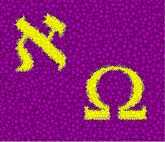 The word Advent means "coming" or "arrival." The focus of the entire season is the celebration of the birth of Jesus the Christ in his First Advent, and the anticipation of the return of Christ the King in his Second Advent. Thus, Advent is far more than simply marking a 2,000 year old event in history. It is celebrating a truth about God, the revelation of God in Christ whereby all of creation might be reconciled to God. That is a process in which we now participate, and the consummation of which we anticipate. Scripture reading for Advent will reflect this emphasis on the Second Advent, including themes of accountability for faithfulness at His coming, judgment on sin, and the hope of eternal life.
In this double focus on past and future, Advent also symbolizes the spiritual journey of individuals and a congregation, as they affirm that Christ has come, that He is present in the world today, and that He will come again in power. That acknowledgment provides a basis for Kingdom ethics, for holy living arising from a profound sense that we live "between the times" and are called to be faithful stewards of what is entrusted to us as God’s people. So, as the church celebrates God’s inbreaking into history in the Incarnation, and anticipates a future consummation to that history for which "all creation is groaning awaiting its redemption," it also confesses its own responsibility as a people commissioned to "love the Lord your God with all your heart" and to "love your neighbor as yourself."
Advent is marked by a spirit of expectation, of anticipation, of preparation, of longing. There is a yearning for deliverance from the evils of the world, first expressed by Israelite slaves in Egypt as they cried out from their bitter oppression. It is the cry of those who have experienced the tyranny of injustice in a world under the curse of sin, and yet who have hope of deliverance by a God who has heard the cries of oppressed slaves and brought deliverance!
It is that hope, however faint at times, and that God, however distant He sometimes seems, which brings to the world the anticipation of a King who will rule with truth and justice and righteousness over His people and in His creation. It is that hope that once anticipated, and now anticipates anew, the reign of an Anointed One, a Messiah, who will bring peace and justice and righteousness to the world.
Part of the expectation also anticipates a judgment on sin and a calling of the world to accountability before God. We long for God to come and set the world right! Yet, as the prophet Amos warned, the expectation of a coming judgment at the "Day of the Lord" may not be the day of light that we might want, because the penetrating light of God’s judgment on sin will shine just as brightly on God’s people.
Because of this important truth, especially in the Eastern Orthodox Churches, the Season of Advent has been a time of fasting and penitence for sins similar to the Season of Lent. However, a different emphasis for the season of Advent has gradually unfolded in much of the rest of the church. The season of Advent has come to be celebrated more in terms of expectation or anticipation. Yet, the anticipation of the Coming of the Messiah throughout the Old Testament and Judaism was not in connection with remembrance of sins. Rather, it was in the context of oppression and injustice, the longing for redemption, not from personal guilt and sin but from the systemic evil of the world expressed in evil empires and tyrants. It is in that sense that all creation groans for its redemption as we witness the evil that so dominates our world (Rom 8:18-25).
Of course, there is the problem of longing for vindication from an evil world when we are contributors to that evil. This is the power of the images of Amos when he warns about longing for the "Day of the Lord" that will really be a day of darkness (Amos 5:18-20). Still, even with Amos’ warning the time of Advent is one of expectation and anticipation, a longing for God's actions to restore all things and vindicate the righteous. This is why during Advent we as Christians also anticipate the Second Coming as a twin theme of the season. So, while some church traditions focus on penitence during Advent, and there remains a place for that, the spirit of that expectation from the Old Testament is better captured with a joyous sense of expectancy. Rather than a time of mourning and fasting, Advent is celebrated as a time of joy and happiness as we await the coming of the King. (see Can We Sing Christmas Carols During Advent?)
There will be time enough during the rest of the journey through the Church Year to remember our sins. It begins in Epiphany when we hear about the brotherhood of the Kingdom, and realize our failure to effect it. Then as we move toward and through Lent we realize that the coming of Jesus served more to lay bare our own sin than it did to vindicate our righteousness. There will be time to shed Peter's bitter tears as we realize that what started with such possibility and expectation has apparently ended in such failure.
It is only as we experience that full cycle, beginning with unbridled joy in Advent that slowly fades into the realization of what we have done with and to the Christ, that the awful reality of Good Friday can have its full impact. And in that realization we can finally be ready to hear the Good News on Resurrection Sunday! That is the journey that the disciples took. And so there is value in taking the same journey beginning with the anticipation and joy of Advent!
So, we celebrate with gladness the great promise in the Advent, yet knowing that there is also a somber tone as the theme of threat is added to the theme of promise. This is reflected in some of the Scripture readings for Advent, in which there is a strong prophetic tone of accountability and judgment on sin. But this is also faithful to the role of the Coming King who comes to rule, save, and judge the world.
Because of the dual themes of threat and promise, Advent is a time of preparation that is marked by prayer. While Lent is characterized by fasting and a spirit of penitence, Advent’s prayers are prayers of humble devotion and commitment, prayers of submission, prayers for deliverance, prayers from those walking in darkness who are awaiting and anticipating a great light (Isa 9)!
The spirit of Advent is expressed well in the parable of the bridesmaids who are anxiously awaiting the coming of the Bridegroom (Matt 25:1-13). There is profound joy at the Bridegroom’s expected coming. And yet a warning of the need for preparation echoes through the parable. But even then, the prayer of Advent is still:
Come, O Come, Emmanuel,
And ransom captive Israel!
The beginning of Advent is a time for the hanging of the green, decoration of the church with evergreen wreaths, boughs, or trees that help to symbolize the new and everlasting life brought through Jesus the Christ. Some churches have a special weekday service, or the first Sunday evening of Advent, or even the first Sunday morning of Advent, in which the church is decorated and the Advent wreath put in place. This service is most often primarily of music, especially choir and hand bells, and Scripture reading, along with an explanation of the various symbols as they are placed in the sanctuary.
 The Advent wreath is an increasingly popular symbol of the beginning of the Church year in many churches as well as homes. It is a circular evergreen wreath (real or artificial) with five candles, four around the wreath and one in the center. Since the wreath is symbolic and a vehicle to tell the Christmas story, there are various ways to understand the symbolism. The exact meaning given to the various aspects of the wreath is not as important as the story to which it invites us to listen, and participate.
The circle of the wreath reminds us of God Himself, His eternity and endless mercy, which has no beginning or end. The green of the wreath speaks of the hope that we have in God, the hope of newness, of renewal, of eternal life. Candles symbolize the light of God coming into the world through the birth of His son. The four outer candles represent the period of waiting during the four Sundays of Advent, which themselves symbolize the four centuries of waiting between the prophet Malachi and the birth of Christ.
The colors of the candles vary with different traditions, but there are usually three purple or blue candles, corresponding to the sanctuary colors of Advent, and one pink or rose candle. One of the purple candles is lighted the first Sunday of Advent, a Scripture is read, a short devotional or reading is given, and a prayer offered. On subsequent Sundays, previous candles are relighted with an additional one lighted. The pink candle is usually lighted on the third Sunday of Advent. However, different churches or traditions light the pink candle on different Sundays depending on the symbolism used (see above on Colors of Advent). In Churches that use a Service of the Nativity, it is often lighted on the fourth Sunday of Advent, the final Sunday before Christmas.
The light of the candles itself becomes an important symbol of the season. The light reminds us that Jesus is the light of the world that comes into the darkness of our lives to bring newness, life, and hope. It also reminds us that we are called to be a light to the world as we reflect the light of God's grace to others (Isa 42:6). The progression in the lighting of the candles symbolizes the various aspects of our waiting experience. As the candles are lighted over the four week period, it also symbolizes the darkness of fear and hopelessness receding and the shadows of sin falling away as more and more light is shed into the world. The flame of each new candle reminds the worshippers that something is happening, and that more is yet to come. Finally, the light that has come into the world is plainly visible as the Christ candle is lighted at Christmas, and worshippers rejoice over the fact that the promise of long ago has been realized.
The first candle is traditionally the candle of Expectation or Hope (or in some traditions, Prophecy). This draws attention to the anticipation of the coming of an Anointed One, a Messiah, that weaves its way like a golden thread through Old Testament history. As God’s people were abused by power hungry kings, led astray by self-centered prophets, and lulled into apathy by half-hearted religious leaders, there arose a longing among some for God to raise up a new king who could show them how to be God’s people. They yearned for a return of God’s dynamic presence in their midst.
And so, God revealed to some of the prophets that indeed He would not leave His people without a true Shepherd. While they expected a new earthly king, their expectations fell far short of God’s revelation of Himself in Christ. And yet, the world is not yet fully redeemed. So, we again with expectation, with hope, await God’s new work in history, the second Advent, in which He will again reveal Himself to the world. And we understand in a profound sense that the best, the highest of our expectations will fall far short of what our Lord’s Second Advent will reveal!
The remaining three candles of Advent may be associated with different aspects of the Advent story in different churches, or even in different years. Usually they are organized around characters or themes as a way to unfold the story and direct attention to the celebrations and worship in the season. So, the sequence for the remaining three Sundays might be Bethlehem, Shepherds, Angels. Or Love, Joy, Peace. Or John the Baptist, Mary, the Magi. Or the Annunciation, Proclamation, Fulfillment. Whatever sequence is used, the Scripture readings, prayers, lighting of the candles, the participation of worshipers in the service, all are geared to unfolding the story of redemption through God’s grace in the Incarnation.
The third candle, usually for the Third Sunday of Advent, is traditionally Pink or Rose, and symbolizes Joy at the soon Advent of the Christ. It marks a shift from the more solemn tone of the first two Sundays of Advent that focus on Preparation and Hope, to a more joyous atmosphere of anticipation and expectancy. Sometimes the colors of the sanctuary and vestments are also changed to Rose for this Sunday. As noted above, in some churches the pink Advent candle is used on the fourth Sunday to mark the joy at the impending Nativity of Jesus.
Whatever sequence is adopted for these Sundays, the theme of Joy can still be the focus for the pink candle. For example, when using the third Sunday to commemorate the visit of the Magi the focus can be on the Joy of worshipping the new found King. Or the Shepherds as the symbol for the third Sunday brings to mind the joy of the proclamation made to them in the fields, and the adoration expressed as they knelt before the Child at the manager. If used on the fourth Sunday of Advent, it can symbolize the Joy in fulfilled hope.
The center candle is white and is called the Christ Candle. It is traditionally lighted on Christmas Eve or Christmas Day. However, since many Protestant churches do not have services on those days, many light it on the Sunday preceding Christmas, with all five candles continuing to be lighted in services through Epiphany (Jan 6). The central location of the Christ Candle reminds us that the incarnation is the heart of the season, giving light to the world.
Advent is one of the few Christian festivals that can be observed in the home as well as at church. In its association with Christmas, Advent is a natural time to involve children in activities at home that directly connect with worship at church. In the home an Advent wreath is often placed on the dining table and the candles lighted at meals, with Scripture readings preceding the lighting of the candles, especially on Sunday. A new candle is lighted each Sunday during the four weeks, and then the same candles are lighted each meal during the week. In this context, it provides the opportunity for family devotion and prayer together, and helps teach the Faith to children, especially if they are involved in reading the daily Scriptures.
It is common in many homes to try to mark the beginning of Advent in other ways as well, for the same purpose of instruction in the faith. Some families decorate the house for the beginning of Advent, or bake special cookies or treats, or simply begin to use table coverings for meals. An Advent Calendar is a way to keep children involved in the entire season. There are a wide variety of Advent calendars, but usually they are simply a card or poster with windows that can be opened, one each day of Advent, to reveal some symbol or picture associated with the Old Testament story leading up to the birth of Jesus. One unique and specialized Advent calendar that can be used either in the home or the sanctuary is a Jesse Tree. (We have available an online Advent calendar with devotionals for each day of Advent as well as Christmas through Epiphany Day: NazNet's Advent and Christmas Celebration). All of these provide opportunities to teach children the significance of this sacred time, and to remind ourselves of it as well.
In congregational worship, the Advent wreath is the central teaching symbol of the season, the focal point for drawing the congregation into the beginning of the story of redemption that will unfold throughout the church year. For this reason, members of the congregation are often involved in lighting the Advent candles and reading the appropriate Scriptures each Sunday. While in some churches it is customary for this to be done by families, it can also be an especially good opportunity to demonstrate the unity of the entire community of Faith by including those without families, such as those never married, divorced, widowed, elderly who live by themselves, or college students away from home.
We live in a world in which bigger and better define our expectations for much of life. We have become so enamored by super size, super stars, and high definition that we tend to view life through a lens that so magnifies what we expect out of the world that we tend not to see potential in small things. But as the prophet Zechariah reminds us (Zech 4:10), we should not "despise the day of small things," because God does some of his best work with small beginnings and impossible situations.
It is truly a humbling experience to read back through the Old Testament and see how frail and imperfect all the "heroes" actually are. Abraham, the coward who cannot believe the promise. Jacob, the cheat who struggles with everybody. Joseph, the immature and arrogant teen. Moses, the impatient murderer who cannot wait for God. Gideon, the cowardly Baal-worshipper. Samson, the womanizing drunk. David, the power abusing adulterer. Solomon, the unwise wise man. Hezekiah, the reforming king who could not quite go far enough. And finally, a very young Jewish girl from a small village in a remote corner of a great empire.
It never ceases to amaze me that God often begins with small things and inadequate people. It certainly seems that God could have chosen "bigger" things and "better" people to do His work in the world. Yet if God can use them, and reveal Himself through them in such marvelous ways, it means that He might be able to use me, inadequate, and unwise, and too often lacking in faith that I am. And it means that I need to be careful that I do not in my own self-righteousness put limits on what God can do with the smallest things, the most unlikely of people, in the most hopeless of circumstances. I think that is part of the wonder of the Advent Season.
I am convinced that one of the main purposes of the incarnation of Jesus was to provide hope. While most people today want to talk about the death of Jesus and the Atonement of sins, the early Church celebrated the Resurrection and the hope it embodied. It was a proclamation of a truth that rang throughout the Old Testament, that endings are not always endings but are opportunities for God to bring new beginnings. The Resurrection proclaimed that truth even about humanity’s greatest fear, death itself.
Both the season of Advent and the season of Lent are about hope. It is not just hope for a better day or hope for the lessening of pain and suffering, although that is certainly a significant part of it. It is more about hope that human existence has meaning and possibility beyond our present experiences, a hope that the limits of our lives are not nearly as narrow as we experience them to be. It is not that we have possibility in ourselves, but that God is a God of new things and so all things are possible (Isa 42:9, Mt 19:26, Mk 14:36)
God's people in the first century wanted Him to come and change their oppressive circumstances, and were angry when those immediate circumstances did not change. But that is a short sighted view of the nature of hope. Our hope cannot be in circumstances, no matter how badly we want them or how important they are to us. The reality of human existence, with which the Book of Job struggles, is that God's people experience that physical existence in the same way that others do. Christians get sick and die, Christians are victims of violent crimes, and Christians are hurt and killed in traffic accidents, bombings, war, and in some parts of the world, famine (see The Problem of Natural Evil).
If our hope is only in our circumstances, as we define them to be good or as we want them to be to make us happy, we will always be disappointed. That is why we hope, not in circumstances, but in God. He has continually, over the span of four thousand years, revealed himself to be a God of newness, of possibility, of redemption, the recovery or transformation of possibility from endings that goes beyond what we can think or even imagine (Eph 3:2). The best example of that is the crucifixion itself, followed by the resurrection. That shadow of the cross falls even over the manger.
Yet, it all begins in the hope that God will come and come again into our world to reveal himself as a God of newness, of possibility, a God of new things. This time of year we contemplate that hope embodied, enfleshed, incarnated, in a newborn baby, the perfect example of newness, potential, and possibility. During Advent, we groan and long for that newness with the hope, the expectation, indeed the faith, that God will once again be faithful to see our circumstances, to hear our cries, to know our longings for a better world and a whole life (Ex 3:7). And we hope that as he first came as an infant, so he will come again as King! (See The Second Coming)
My experience tells me that those who have suffered and still hope understand far more about God and about life than those who have not. Maybe that is what hope is about: a way to live, not just to survive, but to live authentically amidst all the problems of life with a Faith that continues to see possibility when there is no present evidence of it, just because God is God. That is also the wonder of Advent.
Traditional Songs for Advent
(Full lyrics for these can be found at various places online, such as The Cyber Hymnal™)
Christ, whose glory fills the skies
Come, thou long expected Jesus
Comfort, comfort ye, my people
Creator of the stars of night
Day of wrath! O day of mourning, Part 1 (English translation of Dies Irae)
Go, labor on! Spend and be spent
Hark! A thrilling voice is sounding (English translation of Vox clara ecce intonat)
Hark! The glad sound
Hark! The voice eternal
High o'er the lonely hills
Hosanna to the living Lord (for the first Sunday of Advent)
Let all mortal flesh keep silent (English translation of Σιγησάτο παρα σαρξ βροτεία)
Lift up your heads, ye mighty gates (for the first Sunday of Advent; two versions)
Lift up your heads, rejoice (for the third Sunday of Advent)
Light of those whose dreary dwelling
Little children, Advent bids you (for the fourth Sunday of Advent; Second Advent)
Lo! He comes, with clouds descending
Lord Christ, when first thou came to men (two versions)
O Come, Divine Messiah
O come, O come, Emmanuel! (English translation of Veni, veni Emanuel)
O Day of God, draw nigh
O North, with all thy vales of green
O very God of very God
O Savior, rend the heavens wide
O Word, that goest forth on high
On Jordan's bank the Baptist's cry
Rejoice, rejoice, believers!
Savior of the nations, come! (English translation of Veni Redemptor gentium)
Sleepers, wake!
The advent of our King
The day is surely drawing near (for the fourth Sunday of Advent; Second Advent)
The King shall come when morning dawns
The Lord will come and not be slow
The world is very evil (English Translation of Hora novissima)
Thy kingdom come! on bended knee
Thy kingdom come, O God
Wake, awake, for night is flying
Watchman, tell us of the night
When shades of night around us close
Modern and Contemporary Songs for Advent
(Full lyrics for some of these can be found at various places online, such as The Cyber Hymnal™; others are fully copyrighted and can be obtained only from publishers)
At the coming of the Lord
Be Immanuel in me
Before the starry universe
Breath of heaven (for the fourth Sunday of Advent)
Child of wondrous love
Come, our Lord (also a song for Eucharist)
From David's city
Have mercy
Hear the prophets talking
I need a silent night (for the third or fourth Sunday of Advent)
Immanuel, Immanuel
Light a candle
People look east
Prayer for God's presence
Prepare us
The Advent candle shines with hope
There's a voice in the wilderness crying
This is my song (tune Finlandia; for the fourth Sunday of Advent)
To a maid engaged to Joseph (for the third or fourth Sunday of Advent)
Veiled in darkness Judah lay (for the fourth Sunday of Advent)
We have a hope
Welcome to our world (for the fourth Sunday of Advent)
When will the Savior come?
Advent Songs Sung to Christmas Tunes
(Full lyrics for these can be found at various places online, such as The Cyber Hymnal™)
The King shall come when morning dawns (using tune Antioch, Joy to the World)
Watchman, tell us of the night (using tune Mendelssohn, Hark! The Herald Angels Sing)
The people that in darkness sat (using tune Christmas, While Shepherds Watched Their Flocks)
Lo, He comes with clouds descending (using tune Regent Square, Angels from the Realms of Glory)
Of the Father's love begotten (using tune W Zlobie Lezy, Infant Holy, Infant Lowly)
Instrumental
(Music and arrangement scores for these are fully copyrighted and can be obtained only from publishers)
Gabriel's Oboe
-Dennis Bratcher Copyright © 2010, Dennis Bratcher All Rights Reserved
See Copyright and User Information Notice


